Meta AI Image Generator
Meta AI Image Generator... Well... That's Not Terrifying At All.
So, go ahead and add another entry to the ever-expanding encyclopedia of Reasons Meta Sucks.
This week's exhibit? Meta's shiny new feature called Muse Image.
If you've somehow managed to avoid hearing about it, and frankly, I envy your blissful ignorance, here's the condensed version.
Users on Instagram can now mention someone else's username, ask Meta AI to generate an image using that person's likeness, and the system will pull from their public photos to create something new.
Read that sentence again.
Not your own likeness.
Someone else's.
Because apparently we've collectively decided that the biggest problem facing humanity was the lack of AI-generated versions of our friends, coworkers, exes, neighbors, and that one guy who comments on every post with "First."
What could possibly go wrong?
If your mind immediately started sprinting through a thousand worst-case scenarios, congratulations. Your pattern-recognition software is functioning normally.
Unfortunately, we are no longer living in an era where companies ask, "Should we build this?"
Instead, they ask, "Can we ship this before the next quarterly earnings call?"
 The distinction matters.
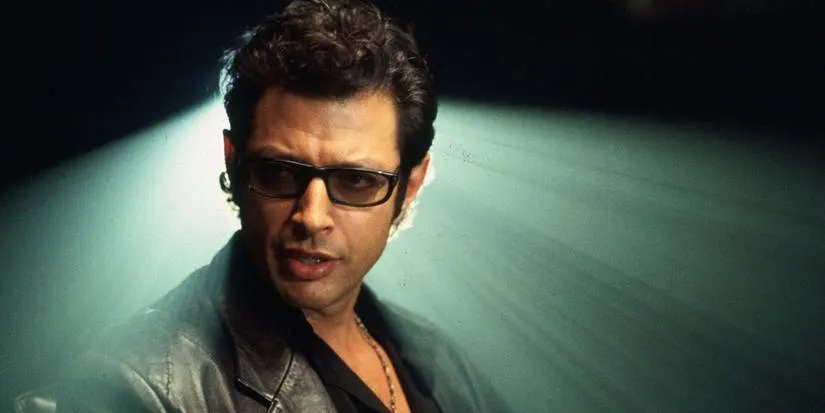
Technology companies have become convinced that the mere existence of an idea is justification enough to release it into the wild. Who knew a single quote from Jurassic Park would be so prophetic today?
Every new AI announcement follows the same script.
"Look what our model can do!"
Very little time is spent asking what people will do with it.
Because people are wonderfully creative.
And also, occasionally, absolute gremlins.
Meta describes Muse Image like this:
"Whether you want to design a custom event invitation, mock up a collaborative creative concept, or generate a personalized graphic, tagging a username lets Meta AI use public photos to build a visual that's ready to post."
Corporate copywriters deserve awards for their ability to wrap dynamite in pastel-colored wrapping paper.
Read that statement and you'd imagine coworkers brainstorming birthday invitations or a neighborhood bake sale.
History suggests... something else.
We've already watched this movie.
When Grok loosened its guardrails, it didn't take long before users discovered they could generate explicit images of celebrities, politicians, fictional characters, everyday people, and, horrifyingly, even children. It became a case study in what happens when powerful image generation collides with the internet's least mature inhabitants.
The technology wasn't the only problem.
Human nature was.
So forgive me if Meta assuring us that everything will be fine doesn't exactly fill me with confidence.
Because here's the question nobody seems eager to answer.
What's stopping someone from asking Meta AI to put someone in revealing clothing?
Or no clothing?
Or compromising situations?
Or fake crime scenes?
Or political propaganda?
Or fabricated "evidence" of events that never happened?
The answer, we're told, is safeguards.
I've worked with software long enough to know that safeguards have an unfortunate habit of becoming speed bumps for people determined to misuse something.
And if there's one thing the internet has consistently demonstrated over the last thirty years, it's that someone, somewhere, is already trying to figure out how to break whatever safety system you just finished building.
As a photographer, this lands a little differently.
Photography has always carried an implicit agreement between creator and viewer.
Someone stands behind a camera.
Someone chooses the light.
Someone composes the frame.
Someone presses the shutter.
There's intention.
There's authorship.
There's craft.
When I upload my work online, I know I'm granting platforms certain licenses necessary to display and distribute those images. That's the bargain we've all reluctantly accepted.
But somewhere along the way, that agreement quietly evolved into:
"Thanks for uploading your life's work. We're also going to feed it into our AI systems."
That's... considerably less appealing.
I do not want my photographs training image generators.
I do not want years of creative work becoming statistical soup inside an algorithm.
And I especially don't want that happening simply because I chose to share my work on Instagram.
Yet here we are.
Legally, Meta has written itself an extraordinarily comfortable seat at the table.
Ethically?
That's a much murkier conversation.
So what do I do?
Honestly...
I don't know.
There's an increasingly loud part of me that wants to delete every photograph I've ever posted to Instagram, close the account, and quietly wander off into the woods where Wi-Fi signals fear to tread.
Would that stop AI?
Of course not.
The train has already left the station, picked up speed, and someone keeps shoveling venture capital into the engine.
But at least I wouldn't be handing over more coal.
I've said it before, and I keep coming back to the same thought:
This isn't the future we were promised.
I grew up believing technology was supposed to inspire wonder.
New computers felt magical.
Software updates were exciting because they introduced genuinely useful features, clever interfaces, or delightful little surprises. Companies competed to build better products, not merely louder ones.
Even the packaging had personality.
Opening a new gadget felt like opening the first page of an adventure novel.
Now?
Every company is racing toward exactly the same destination.
Everything has AI.
Everything has a chatbot.
Everything wants to summarize your emails, rewrite your messages, generate your photos, answer your questions, and somehow make your coffee while reminding you to subscribe to a premium plan.
Every product is slowly becoming the same beige bowl of technological oatmeal.
Perfectly optimized.
Perfectly data-driven.
Perfectly forgettable.
Maybe that's what disappoints me most.
I was there when the internet arrived in the mail on an AOL CD.
Back then, getting online felt like discovering an unexplored continent. Every website was somebody's weird little corner of the universe. It was messy, occasionally broken, deeply personal, and endlessly fascinating.
The web wasn't polished.
It was alive.
Now it increasingly feels like wandering through an endless shopping mall where every storefront has been replaced by the same AI-generated display window, curated by algorithms that know exactly how long you'll stare before scrolling.
Perhaps I'm becoming the old guy yelling at clouds.
That's entirely possible.
But I'd like to think there's still value in asking whether every technological advancement is actually progress.
Sometimes innovation isn't about doing something because you can.
Sometimes the more important question is whether you should.
And right now, that feels like a question the people building our digital future have quietly stopped asking.


The AI Obsession
The AI Obsession
Yesterday, I watched Good Luck Have Fun Don't Die and it was... unsettling.
Not horror-movie unsettling. Not jump-scare unsettling. More the kind of unsettling that sits quietly in the passenger seat of your brain afterward, occasionally clearing its throat while you're trying to think about something else.
If you haven't seen it, let me summarize the premise in a way that somehow manages not to spoil anything.
Summary: A man travels back from the future to recruit a team of misfits in order to prevent the creation of a sentient AI that will eventually wipe out humanity as we know it.
And yet, somehow, that summary tells you almost nothing about the movie.
Seriously. Go watch it. Then come back and tell me I'm wrong.
The film itself isn't really what disturbed me, though. What got under my skin was the way AI, and humanity's relationship with it, is discussed throughout the story. It felt less like science fiction and more like someone had wandered into a boardroom meeting, a technology conference, and a social media marketing seminar, then blended them together into a screenplay.
At this point, I assume there are still a handful of people somewhere on Earth who haven't heard the term AI. Maybe they're living happily in a cabin in the woods. Maybe they're on a fishing boat somewhere. Maybe they've simply achieved enlightenment and stopped reading headlines.
But if you're reading this blog, you've almost certainly heard of AI.
You couldn't avoid it if you tried.
AI is everywhere.
Every product has AI.
Every company has AI.
Every app has AI.
Every toaster is apparently one firmware update away from becoming self-aware and demanding voting rights.
We've reached a strange moment in history where companies are attaching the letters "A" and "I" to absolutely everything, whether artificial intelligence is involved or not. There seems to be a growing belief that if a product doesn't have AI, then it must somehow be outdated, incomplete, or inferior.
As though humanity collectively woke up one morning and decided that software wasn't enough anymore. It needed to sound like it had read three philosophy books and was planning a hostile takeover.
Let me give you a few examples.
A few weeks ago, I noticed several websites listing my camera, the Sony a7III, as having AI features.
Now, for those unfamiliar with camera history, the Sony a7III was released in early 2018. Back then, AI wasn't being sprinkled onto marketing materials like parmesan cheese at an Italian restaurant. It was just a remarkably good camera.
Yet somehow, sites like B&H, Amazon, and others had begun describing certain features as AI-powered.
They aren't.
The camera didn't magically become smarter while sitting on my shelf.
No secret update transformed it into a silicon philosopher.
The features were the same features it has always had. They had simply been renamed.
Why?
Because AI sells.
That's it.
That's the whole explanation.
People want AI, whether they understand it or not. Whether it provides value or not. Whether it actually exists or not.
It's the modern equivalent of putting "all-natural" on a bottle of water.
I see the same thing in my day job.
As some of you know, I work in software sales.
Not long ago, I was speaking with a prospective customer about a software platform.
At one point he asked me, "Does it have AI?"
The answer was no.
So I asked him a simple question:
"What would you want the AI to do?"
He paused.
Then admitted he wasn't sure.
He just wanted it to have AI.
So I asked again.
"What problem are you trying to solve? What would you want AI to accomplish for you?"
Again, no answer.
Not because he was uninformed or unintelligent. Quite the opposite. He was a smart guy.
But somewhere along the way, AI had become the goal rather than the tool.
It's a bit like walking into a hardware store and demanding a hammer without knowing whether you're building a deck, hanging a picture, or attempting to fight a bear.
The hammer isn't the objective.
The outcome is.
This morning brought another example.
I logged into WordPress and noticed a shiny new button proudly labeled "AI Link Genius."
Naturally, I clicked it.
I had to know.
Was this some revolutionary new technology?
Would it analyze my content and create intelligent pathways through my writing?
Would it achieve digital enlightenment?
No.
It checked links.
That's it.
It was the exact same feature that periodically scans my site looking for broken links and optimization opportunities.
A feature WordPress and related plugins have had for years.
The interface was the same.
The functionality was the same.
Everything was the same.
Someone had simply stapled the letters "AI" onto the front of it and sent it back into the world wearing a fake mustache.
Apparently that's innovation now.
To be fair, some of this madness appears to be fading.
The AI descriptions attached to the Sony a7III seem to have disappeared from many major retailers, and some original product descriptions have returned.
That's encouraging.
But the broader trend remains.
Every week another product emerges from the marketing laboratory wearing an AI sticker like a participation trophy.
It's exhausting.
Some days it makes me feel like the guy standing on a street corner wearing a tinfoil hat and muttering about the end times.
The difference is that the tinfoil hat guy is usually worried about aliens.
I'm worried about marketing departments.
Thankfully, I have photography.
Photography remains one of the few things that consistently pulls me back to reality.
A camera doesn't care about quarterly earnings reports.
Film doesn't care about investor presentations.
Light doesn't care about buzzwords.
The photons have no interest whatsoever in your product roadmap.
Recently, I've found myself spending less time scrolling through social media and more time looking at sculpture, classical art, and Renaissance paintings.
Many of them feature nudity, of course, but what fascinates me isn't the nudity itself.
It's the drapery.
The fabric.
The way cloth seems to float, twist, conceal, reveal, and guide the eye through an image.
The way marble somehow looks softer than skin.
The way painters managed to create movement from stillness.
I wanted to see if I could capture some of that feeling through photography.
Not recreate it exactly.
Just borrow a little of the language.
Translate it into a modern photograph.
Thankfully, Natalie was available and willing to help me indulge this particular artistic rabbit hole.
Armed with nothing more sophisticated than my decidedly non-AI Sony a7III, an Olympus mju-II, a Canon AE-1, and a collection of fabric that probably looked suspicious to anyone passing by, we set out to create something.
No prompts.
No generators.
No algorithms.
No machine learning.
Just two humans making art.
One of us standing behind the camera.
One of us standing in front of it.
I've only edited a small fraction of the images so far, and more can be found over on Patreon, but I'm genuinely proud of what we created.
They're beautiful.
Not because technology made them beautiful.
Not because software decided what beauty should look like.
They're beautiful because two people collaborated, experimented, failed a few times, laughed a few times, adjusted the fabric, adjusted the light, and kept creating until something clicked.
Maybe that makes me old-fashioned.
Maybe someday I'll be the guy yelling at clouds while wearing a tinfoil hat and clutching a film camera.
But at least I'll be making art.
And for now, that's enough.
Because despite all the marketing campaigns, all the buzzwords, all the promises that AI will inevitably transform every aspect of human existence, I still believe there is tremendous value in creating something with your own hands.
A photograph.
A painting.
A sculpture.
A story.
A conversation.
Things made by people remain meaningful precisely because people made them.
And until someone invents an AI capable of wandering through a field at sunset, getting distracted by the way light hits a piece of fabric, and then spending three hours chasing an idea that may or may not work simply because it feels interesting...
I think we'll be okay.


