Hanging On
It’s rare for me to come across something online that actually makes me feel connected, to the writer, to the words, to that quiet hum under everything. But yesterday I stumbled across an article by Claire Huish, and I thought, finally, someone has put into words a feeling I’ve carried for years but never quite named.
The line that stopped me was this:
I felt that. Deeply.
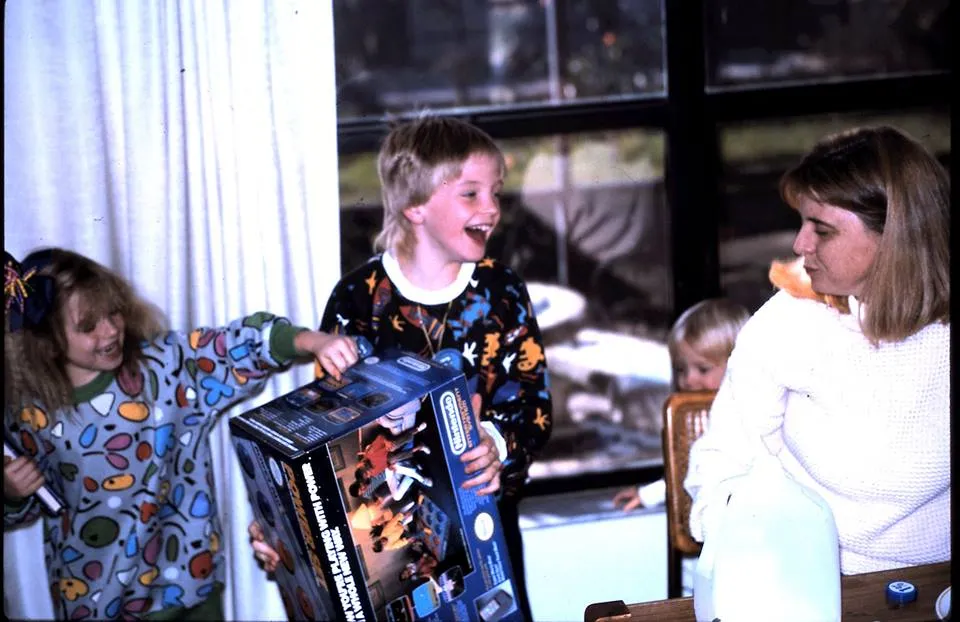
Sitting in a long plastic storage box in my closet is what remains of my childhood, the entire archaeological record of my early life. A few Asian coins my dad brought back from a business trip. A couple of $2 bills. A few old school papers written in a shaky hand that still believed cursive would matter forever. Some photos. Odds and ends.
 The rest is gone. Some given away (like my original Atari and Nintendo). Some lost to tragic accident (a 500-disc CD changer I sold on eBay… with all 500 CDs still inside). And some just quietly vanished when I left home for a mission with the Mormon church. My room was packed up, my sister moved in, and my things? Scattered to the wind.
The worst loss came years later, during my divorce. I was broke, bills, rent, the whole mess, and had to hold a garage sale that felt like auctioning off pieces of myself. My Magic: The Gathering cards went to a friend’s kid. My first armored fighting helmet, the one from my days sparring with The Knight Order of the Fiat Lux, sold for next to nothing. Even my expensive curtains went for pocket change. Everything I owned became survival fuel.
Maybe that’s why I hold onto things so tightly now. The dozen or so photo prints thumbtacked to my wall, the journals stacked like quiet witnesses of time, the books that somehow made it through every loss. They’ve become little anchors, proof I was here, that I lived, that I carried something forward.
I don’t like replacing things. I blame The Brave Little Toaster. That movie convinced me my belongings might get sad if I abandoned them. But if I’m honest, it’s not about the stuff. It’s about what they hold, the memories stitched into them, the moments that might otherwise fade if I let them go.
Every object I keep is a small declaration: I was here once. I saw things. I loved things.
And after years of losing so much, maybe hanging on is just my way of saying, to myself, to time, to the universe — I’m still here.


What I Am Continuing to Give Energy To
What I Am Continuing to Give Energy To
At the beginning of this year, I had a list of goals, things I wanted to learn, build, or become. Some of those goals I’ve done well with. Others… not so much. Occasionally, I like to stop, take inventory, and ask myself where my energy is actually going, and whether that’s where I want it to go.
This is a summary, or perhaps a quiet confession, of what I’ve decided is still worth giving energy to.
Socializing
When my wife and I moved to Georgia in 2023, I unintentionally became a hermit. I rarely left the house, and when I did, it was usually to wander around alone — the quiet explorer type, armed with a camera and far too many thoughts. I missed my friends in Florida, and, truthfully, wasn’t ready to start over socially.
But as 2025 began, I decided that needed to change. “Be social,” I told myself, which sounded simple until I had to, you know, do it.
So, I started attending the monthly ATL Shooters events, organized by a fellow photographer named Tony. He picks locations, brings together photographers and models, and somehow makes the whole thing feel like both a creative playground and a social gathering. I’ve met incredible people there, seen inspiring work, and I think — I think — I’ve even made a few friends.
As 2025 winds down and 2026 prepares for her grand entrance, I plan to keep showing up. Keep talking. Keep practicing the strange art of human connection. It’s worth the effort, awkward small talk and all.
Organizing Themed Photo Shoots
For the last several years, I’ve loved organizing themed photoshoots, little cinematic experiments that bring my imagination to life. This year has been no exception.

Through ATL Shooters, I met some wonderful models and hosted a “Bond Girl” photoshoot with MacKenzie, Heather, Morgan, and Hunter. A while later, Heather and I finally made it to Shoal Creek Falls for that waterfall shoot we’d been planning. This month, I have shoots scheduled with Sammi, Maeve, and Gabrielle down in Florida, and in November, I’ll be part of an LGBTQ+ swimwear catalogue rebrand, which still feels a little surreal to say.
There are a dozen more concepts swirling in the back of my mind... a laundromat shoot, something Christmassy, a maternity concept, a dark femme fatale series, and more. I have no plans to stop dreaming them up. If anything, the list just keeps getting longer.
Continuing to Learn Art
 One of my goals for 2025 was to study art more deliberately, to dive into art history and teach myself to draw. It sounded romantic in theory. In practice, art history books have the unique power to put me to sleep faster than melatonin. I’ll read a few pages, realize I’ve absorbed nothing, go back, try again, and drift off somewhere around page two.
So, I’ve decided to meet my brain where it lives, in chaos, and explore art history through YouTube channels instead. Maybe that’ll stick better.
As for drawing, progress is slow but real. I have no natural talent, but I’m stubborn, and there’s something grounding about learning a skill that refuses to come easily.
Lately, I’ve also fallen in love with art/junk journaling, the deliciously messy act of gluing scraps and smearing paint across a page until it looks like emotional archaeology. It’s cathartic, unplanned, and I have no intention of stopping. If anything, I suspect my journal pages are only going to get more unhinged as time goes on, and I’m perfectly fine with that.
I Will Continue Going to Therapy
Let’s be honest: I am, like most humans, a bit of a work in progress, cracked in interesting places. Some of that damage is my doing, some of it isn’t, and some of it is just life being life.
This year I found a new therapist. She’s excellent, brilliant, kind, and slightly sadistic in the best way possible. She’s helping me dig into things I’ve buried so deep they probably have fossils by now.
I believe therapy matters. Life is hard, and being human is harder. None of us make it through without scars, and having a place to unpack them safely feels necessary. I don’t know if I’ll ever reach a point called “healed.” I’m not even sure that’s the goal. But I am committed to the process, one difficult conversation at a time.
Using My Phone Less
At the start of the year, I made a noble (and wildly optimistic) g

oal to limit my phone use to one hour per day. Naturally, I failed spectacularly.
But the experiment wasn’t a total loss. In fact, some good things came out of it.
First, I started using Spotify less because I finally bought a modded iPod — newbattery, SD card storage, the whole nostalgic package. I’d missed that feeling of listening to music without algorithms lurking nearby, taking notes. Just me, my iPod, and the soundtrack of my day.
Second, I’ve stopped scrolling during shows or movies. For years I’d multitask entertainment, barely absorbing either thing. Now, I try to actually watch what I’m watching, and it turns out, stories are more enjoyable when you’re present for them.
So yes, I’m still on my phone more than an hour a day, but less than I used to be, and that feels like progress worth celebrating.
So What Will the Future Bring?
No idea. I stopped trying to predict the future years ago, she’s too unpredictable, too fond of plot twists.
But I do know this: I plan to keep doing these things. To keep showing up for art, for people, for healing, for myself. To keep finding the things that give energy back instead of draining it away.
The rest will reveal itself in time. It always does.
Adam Scott, I'd Like To Have A Word With You
Adam Scott, I'd Like To Have A Word With You!
There are days when I’d give anything for a brief stroll through time, just long enough to grab my former self by the shoulders and ask, “How could you do this to me?!” Perhaps even shake him dramatically for good measure. But alas, time travel remains inconveniently theoretical, and we are forever bound to suffer the consequences of our own artistic chaos.
 I’ve been writing on this blog for what feels like several geological eras, since around 2005 or 2006, back when “blogging” was the digital equivalent of carving your thoughts into the primordial internet stone. It was a strange, lawless time: I posted memes before memes had names, links to odd corners of the web, photos that had no business being uploaded at 480p, and the occasional earnest post for flavor. It was messy, delightful, and entirely emblematic of the early 2000s, a glorious digital attic that I now regret not labeling properly.
Earlier this week, WordPress (my ever-patient jailer) gently informed me that my media library was nearing its storage limit. Apparently, two decades of memes, photos, and questionable creative decisions take up space. Many of those early posts have long been archived into oblivion, maybe still haunting The Wayback Machine like digital ghosts, but their files have lingered, bloating my library like unwashed laundry.
And so, yesterday, I began the task of cleaning it all up. It’s tedious, soul-numbing work, and I can feel my younger self laughing somewhere in the background, blissfully unaware that “future me” would one day be untangling his digital mess.
The first thing I discovered? There isn’t a single free, user-friendly plugin that will clean, organize, and optimize your media library. Oh, there are plenty that claim to, but they all seem to require a subscription, a blood pact, or a minor in computer science. The second thing? Past Adam was a disaster when it came to labeling. No titles. No descriptions. No alt text. No SEO. Just a parade of unmarked JPEGs floating in the void like lost souls.
So here I am, naming, tagging, resizing, and redeeming thousands of wayward images, one by one. It’s a slow, purgatorial process, and I have no one to blame but my own youthful enthusiasm and complete disregard for metadata.
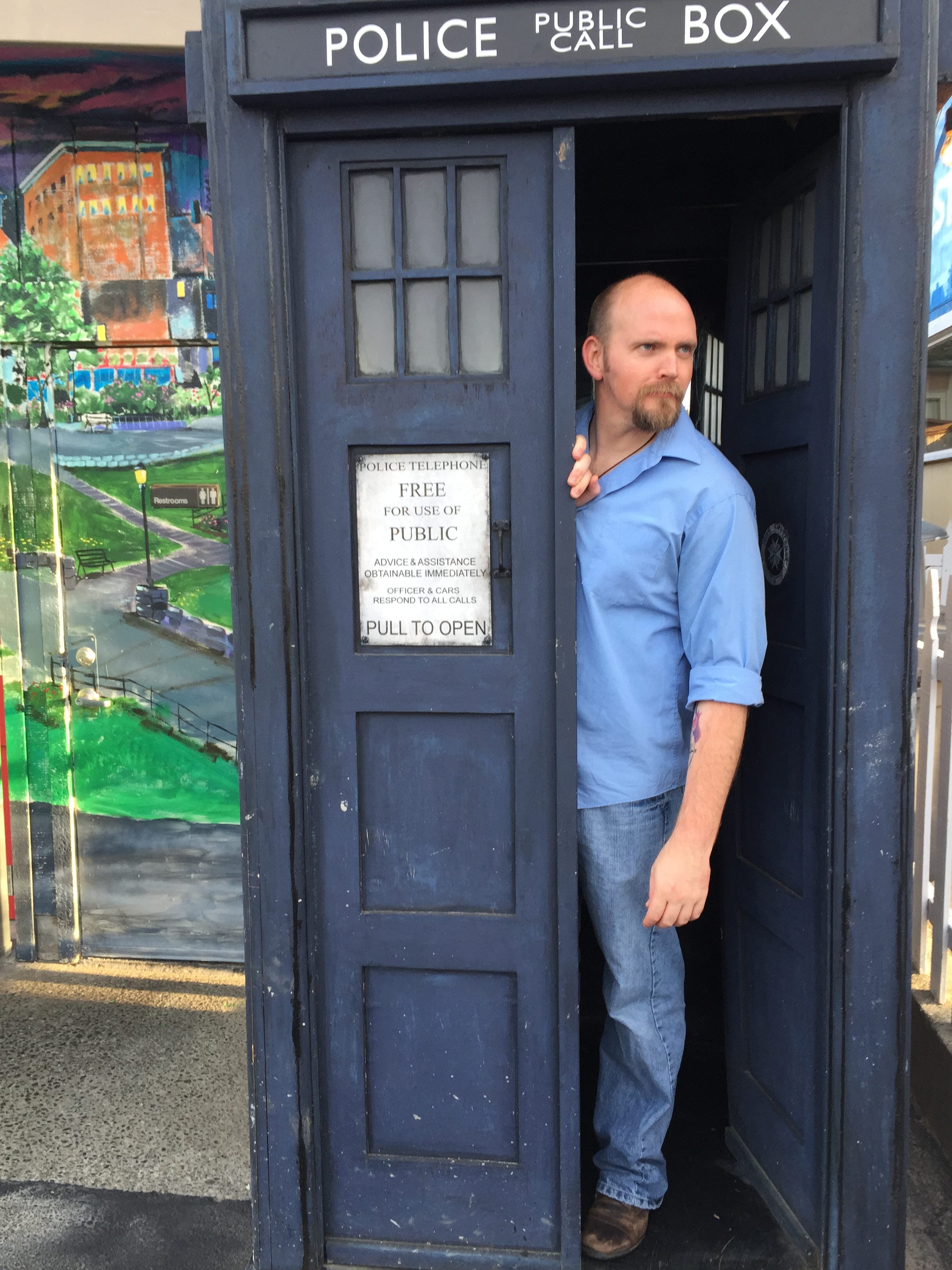
If anyone out there happens to stumble upon a TARDIS, a flux capacitor, or a suspiciously glowing amulet that whispers secrets of temporal travel, do let me know. I have a few sternly worded, possibly expletive-laced things I’d like to say to 2006 Adam.

Spirit Halloween on 35mm Film
Spirit Halloween on 35mm Film
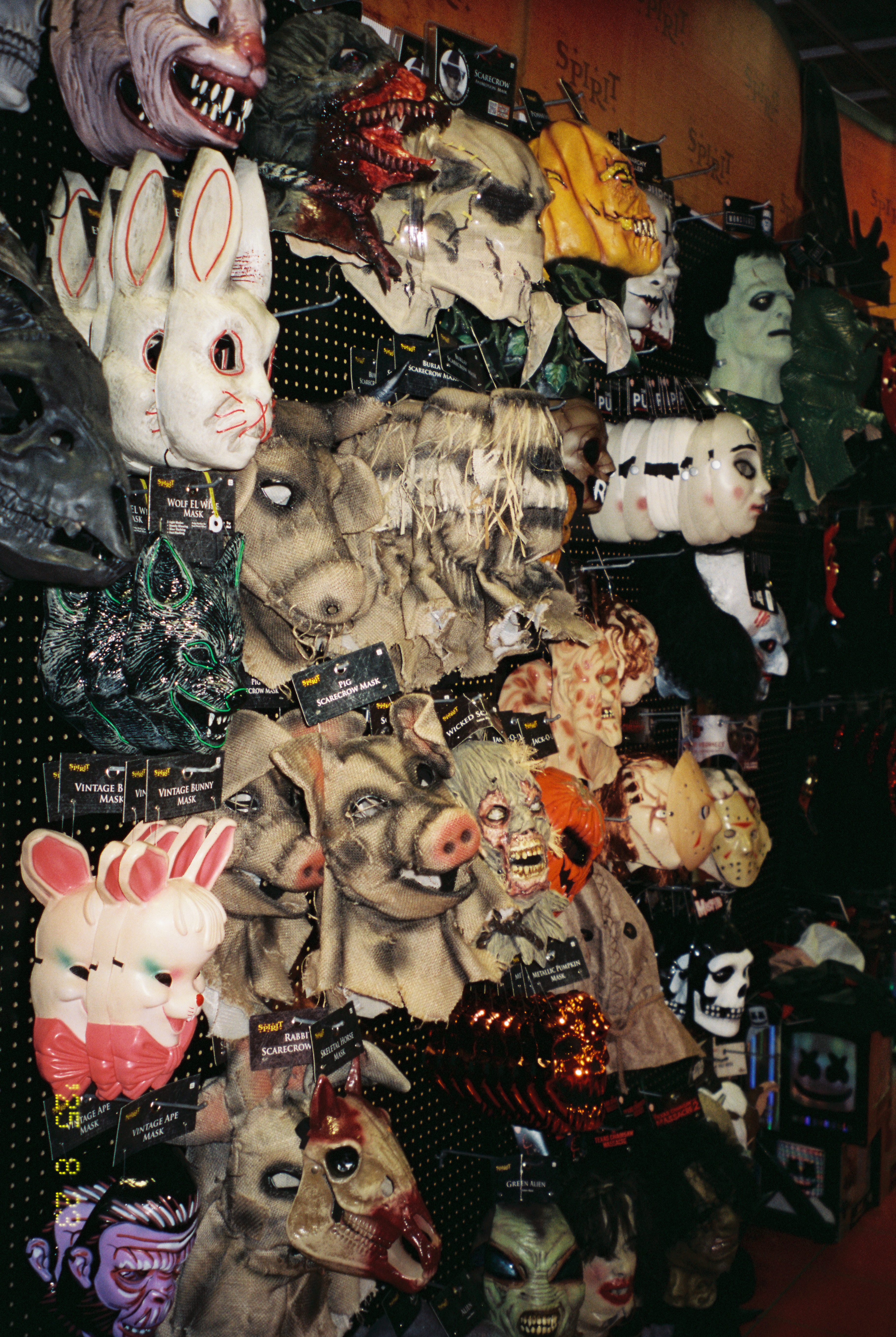
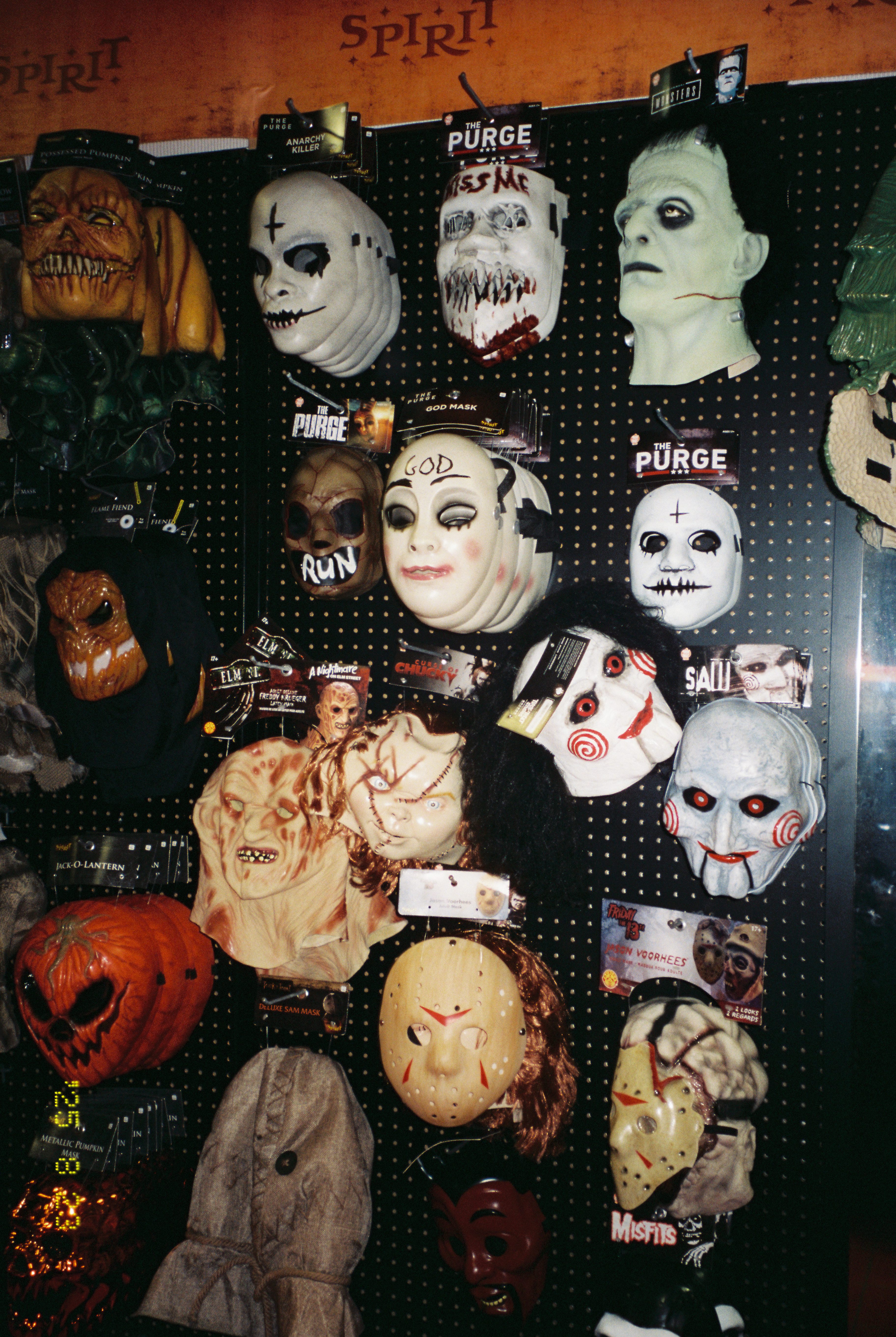
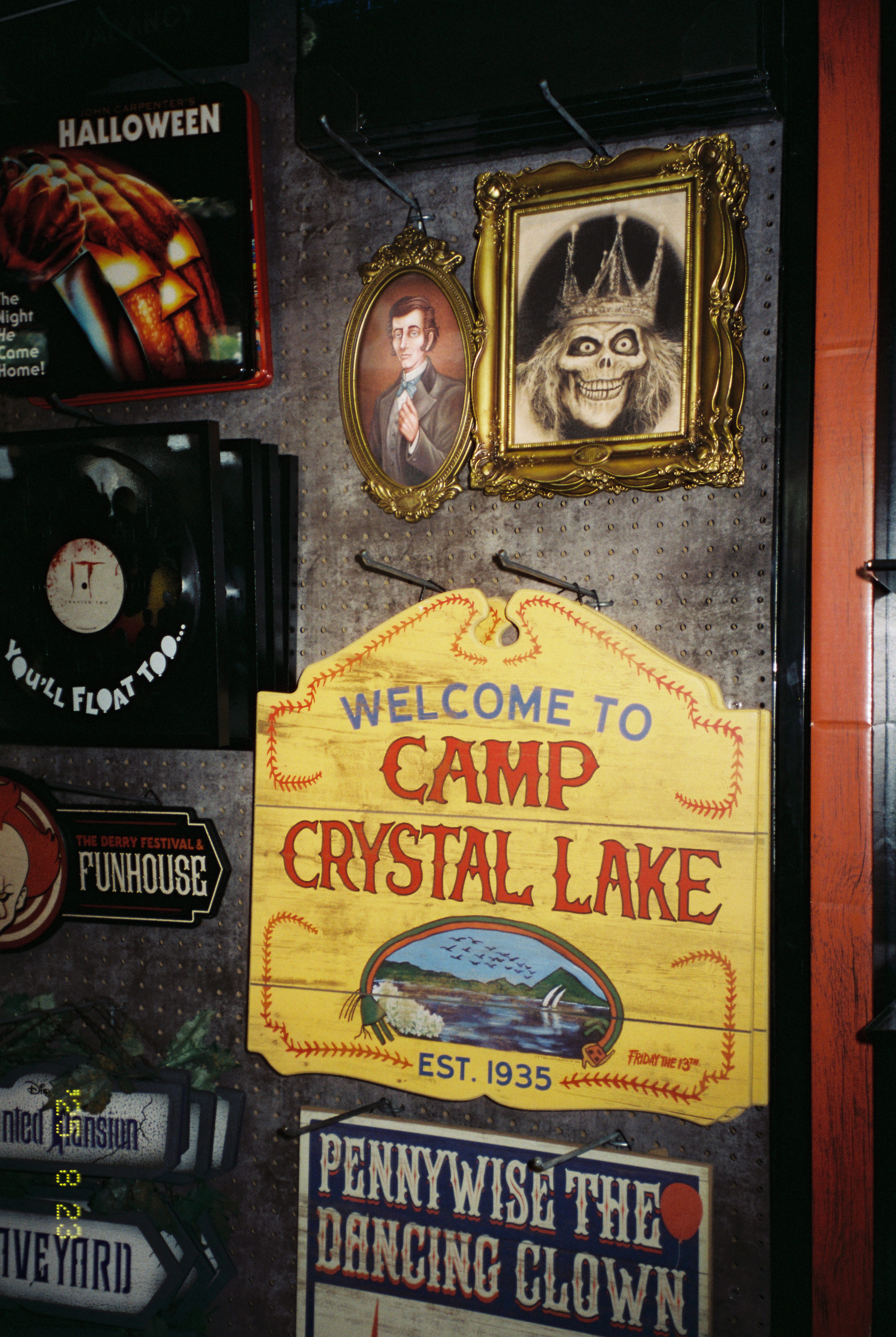
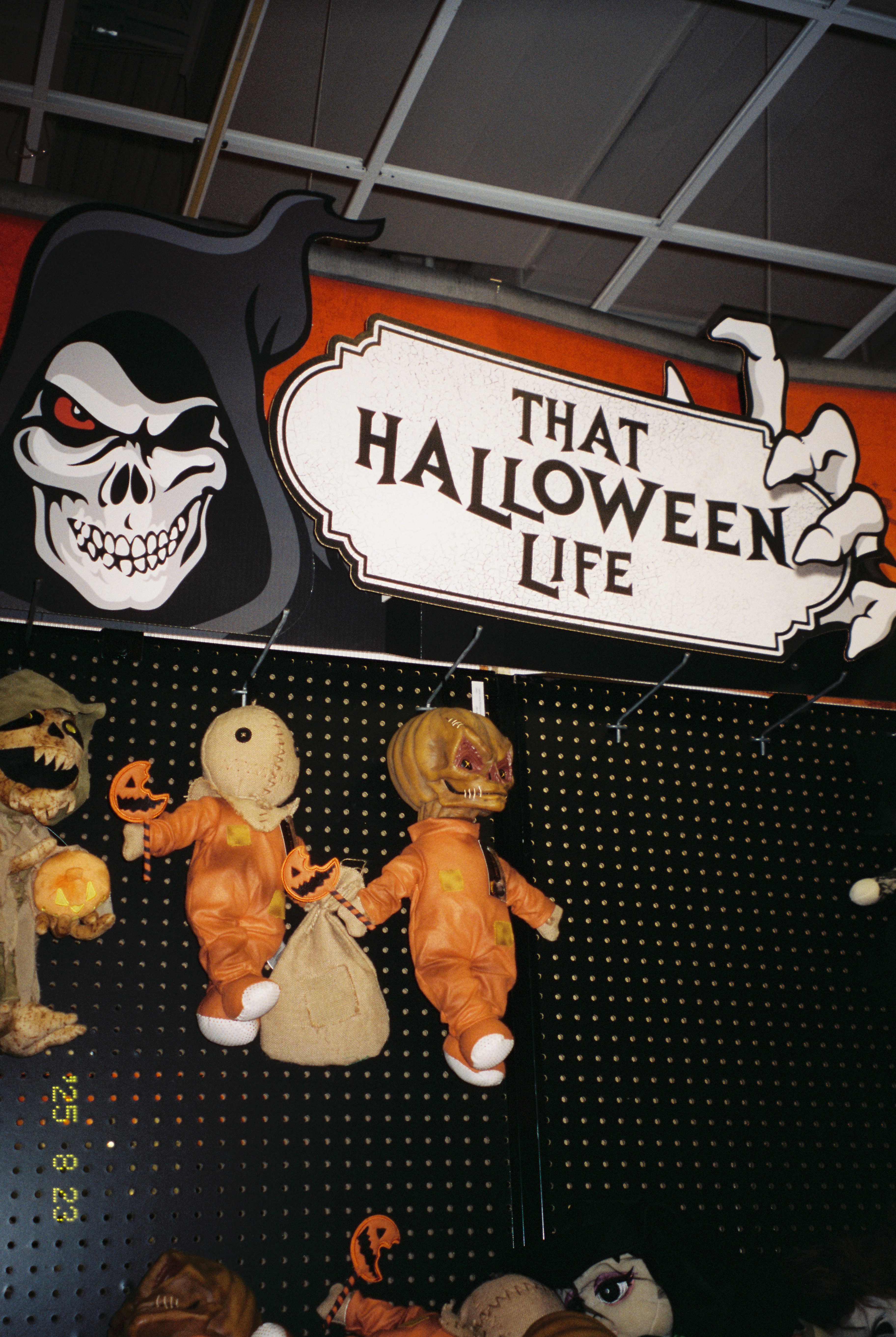
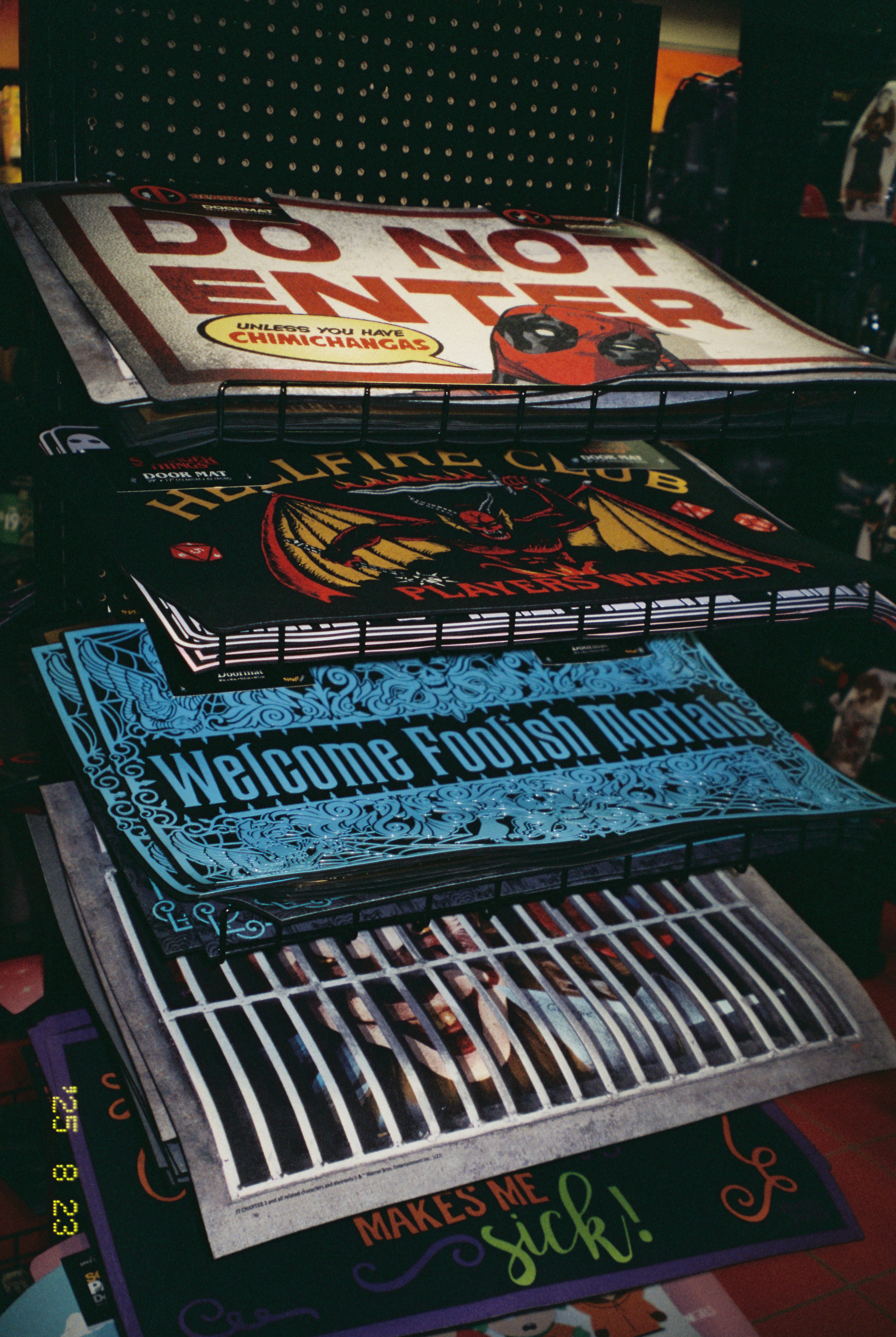
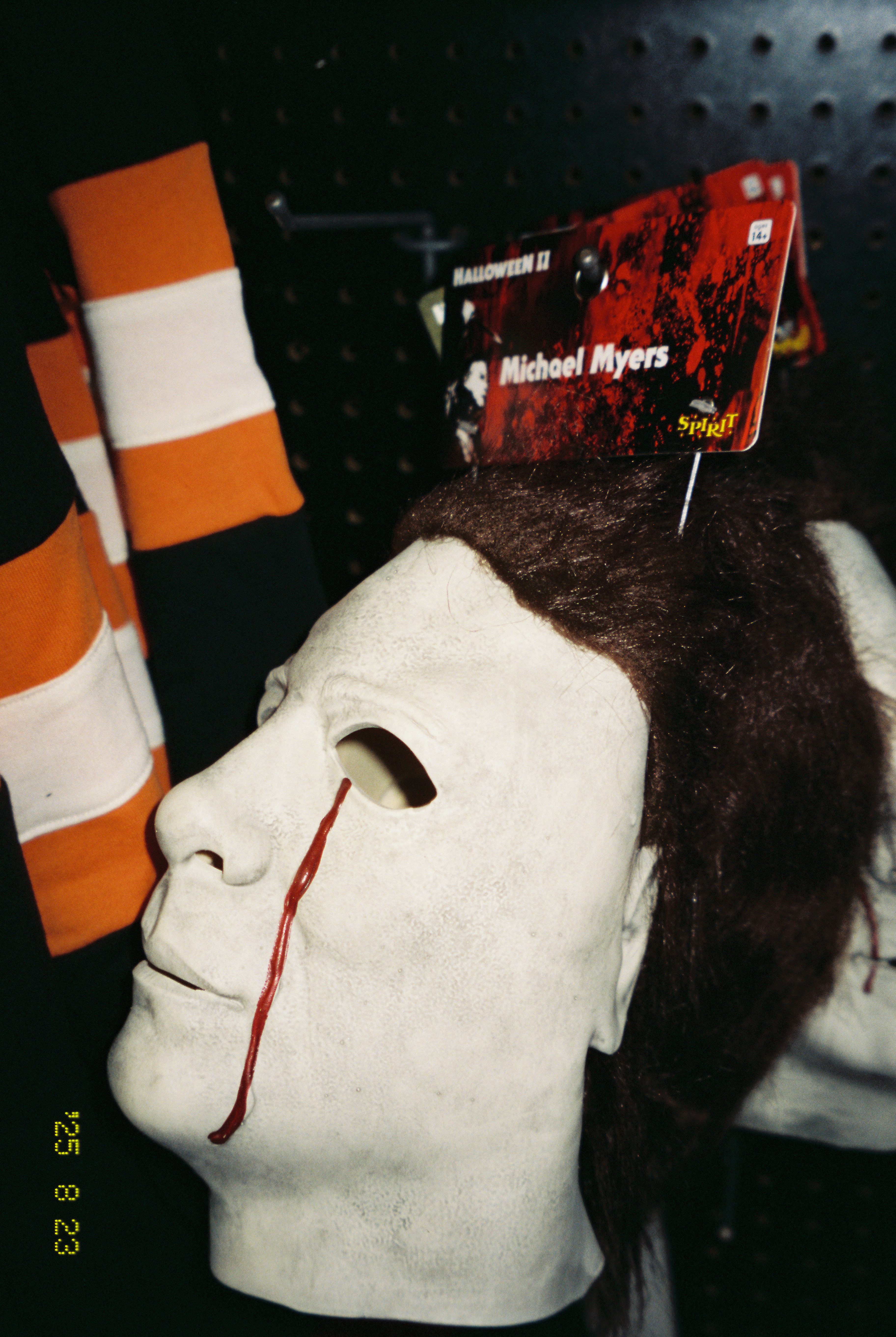
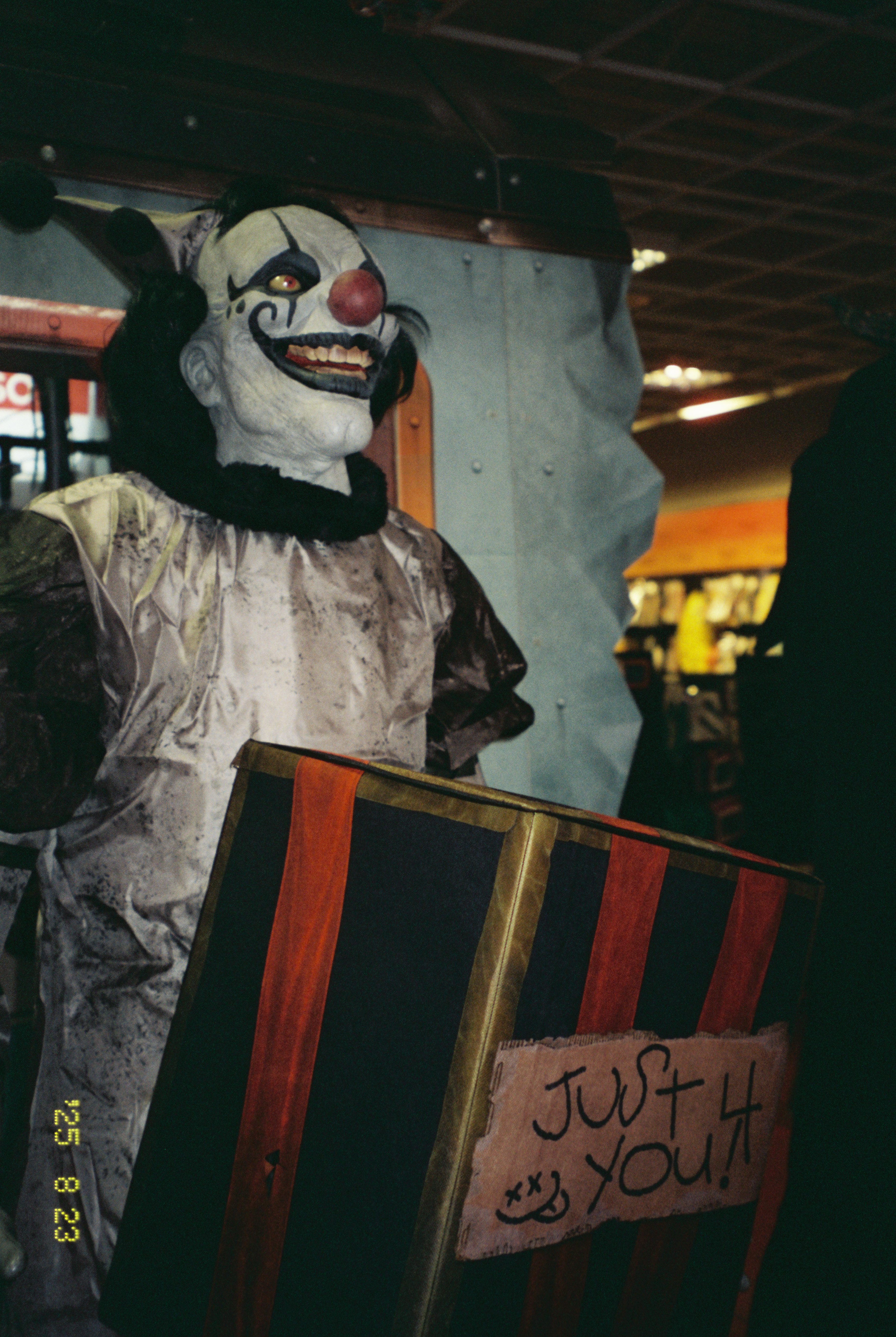
I took my old Olympus mju ii point-and-shoot 35mm, into a Spirit Halloween store. Honestly, I wasn’t expecting much. Just some fun shots of skeletons, masks, and the chaotic aisles of seasonal weirdness. But film has a way of catching ghosts you don’t see until later.
When I got the scans back, the photos were nothing like what I thought I’d captured. They came out gritty, raw, almost dirty in a way that feels too perfect for Halloween. A cheap mask looks like something cursed. A plastic skeleton feels like it’s waiting for the lights to go out so it can move. Even the props, mass-produced and over-the-top—carry this dingy, haunted vibe you’d never expect in the bright chaos of a store.
And that’s what I love about it.
Film always surprises me. It doesn’t care about perfection or control, it leans into the flaws, the blur, the shadows, the dirt in the frame. That’s where the magic happens. In a world that polishes everything smooth, there’s something thrilling about images that feel a little unhinged, a little haunted. Spirit Halloween is chaotic enough on its own, but through the lens of 35mm film, it becomes something else entirely: a lo-fi fever dream where the plastic monsters feel just a bit too real.
That’s why I keep coming back to film. It makes even the fake look real, and sometimes, realer than I bargained for.





Shooting DragonCon on 35mm Film
Shooting DragonCon on 35mm Film
This past weekend I was back at DragonCon in Atlanta, GA—my eighth time wandering through the whirlwind of costumes, creativity, and caffeine. Usually, I come armed with my Sony a7iii, photographing cosplay with the clarity and precision of digital perfection. But this year, I decided to do something different.
I left the pro camera at home.
Instead, I carried only my Olympus mju ii, a 35mm point-and-shoot that feels more like a time capsule than a tool.
Why? Because I wanted to see DragonCon differently.
Film doesn’t care about perfection. It doesn’t smooth over the cracks or polish the chaos. It gives you grain, blur, light leaks—accidents that somehow feel more alive than flawless digital files. Shooting DragonCon this way reminded me why I fell in love with photography in the first place.
It felt real. It felt raw.
And in a world overflowing with filters, AI-generated “art,” and endless fakery, that matters to me. I want to create work that can’t be faked—images that carry fingerprints, flaws, and honesty.
The experiment worked. These images? They aren’t just technically strong. They have soul.
So here’s to the imperfect, the unpolished, the beautifully real. Sometimes, leaving the fancy gear behind is the only way to remember why we pick up a camera at all.
[ngg src="galleries" ids="65" display="thumbnail"]
Goodbye Ozzy
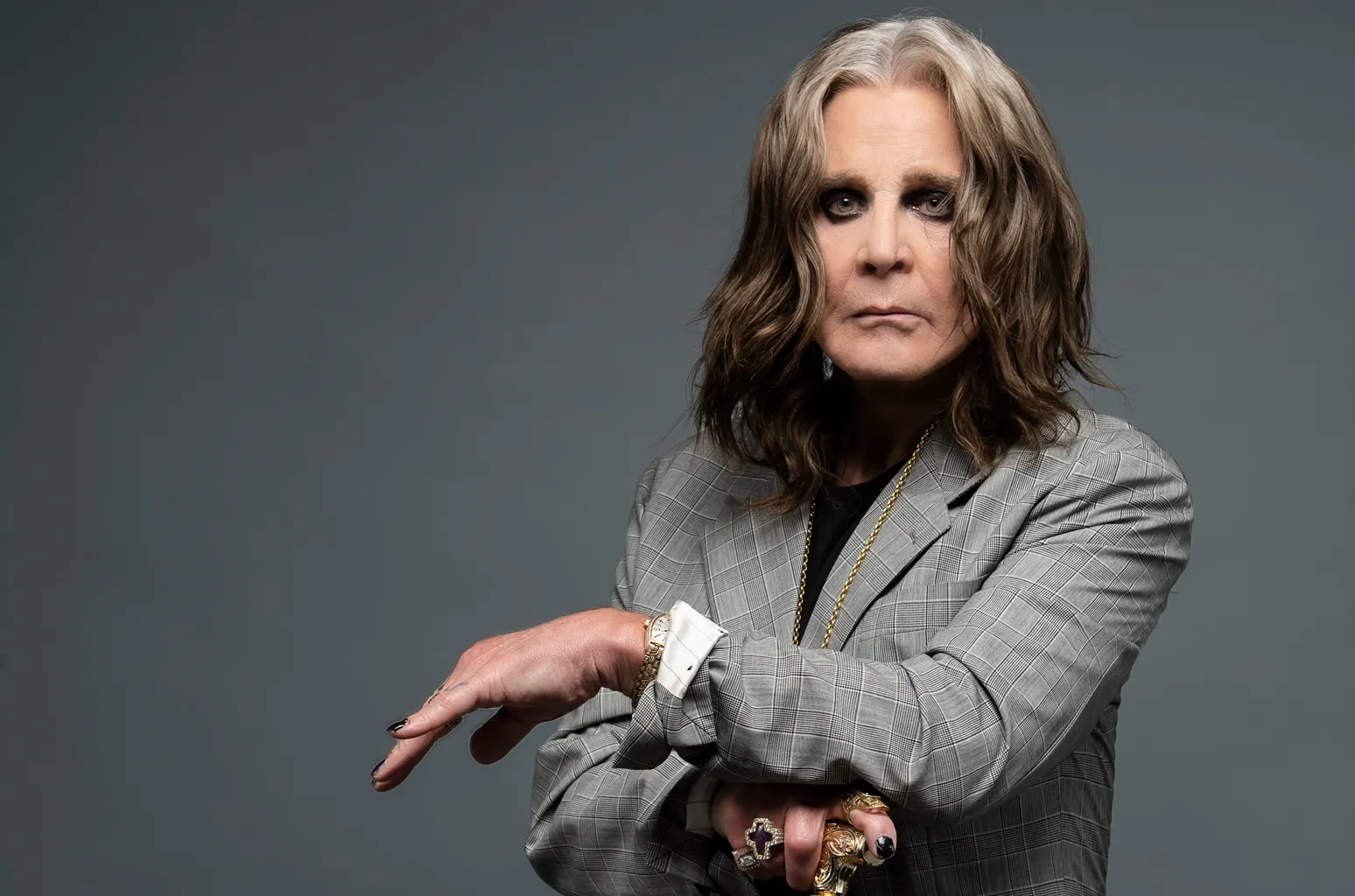
Goodbye Ozzy Osbourne
Like a lot of folks around the world, I’ve had Ozzy Osbourne on repeat for days. His death caught me off guard—not in the "celebrity dies, cue the tribute posts" kind of way, but in the gut-punch, slow-burn grief kind of way. The kind that sneaks up on you and sits heavy. I didn’t expect to feel it this deep. But I do. And I want to try and explain why.
Anyone who knows me knows that 80s hair metal is my music. Poison. Guns & Roses. Alice Cooper. Foreigner. Motley Crüe. And yeah—Ozzy. What most people don’t know is how hard it was for me to even find that music, much less fall in love with it.
I grew up in a hyper-conservative, right-wing Mormon household. The kind where "Satanic Panic" wasn’t a warning label—it was taken as gospel truth. My mom would latch onto every half-baked urban legend about musicians and treat it like fact. She tried to ban D&D. Certain books. And of course, music. Especially the kind I ended up loving.
For the first 14 years of my life, my world was small. Church-approved, sanitized, and heavily filtered. But when I hit high school, everything cracked open.
Enter Donna and Markham—two of the best people I’ve ever met, then and now. The three of us stumbled headfirst into the world of 80s hair metal, and it felt like coming home. We listened constantly, we swapped albums, we got weird and loud and free. And we caught hell for it.
My CDs disappeared from my room more than once—thanks, Mom. My dad once hauled me into the bishop’s office, hoping the church could succeed where he’d failed. Meanwhile, he listened to classical music and Rush Limbaugh and couldn’t fathom what I saw in eyeliner and guitar solos.
But they couldn’t stop it. That music sank into me and stayed.
It shaped how I dressed, how I loved, how I rebelled.
It taught me how to scream back at the world without saying a word.
It gave me a place to belong.
And Ozzy was a huge part of that.
He was loud and flawed and real.
He didn’t hide his mistakes. He didn’t pretend to be better than he was.
He just was.
A father, a husband, a survivor, and yeah—a little batshit. But always honest.
He didn’t conform. He didn’t water himself down. And in doing that, he gave kids like me permission to be something other than what we were told to be.
His death feels like losing a weird, beloved uncle. One of the only adults who never expected you to behave. I’m sad he’s gone. Really, deeply sad. But more than anything, I’m grateful.
Grateful for the music.
For the rebellion.
For the reminder that sometimes, being “too much” is exactly what the world needs from you.
Goodbye, Ozzy.
And thank you.
For all of it.
You mattered. A lot.
A Quiet Trail Away from History
Ethical Hiking in Georgia
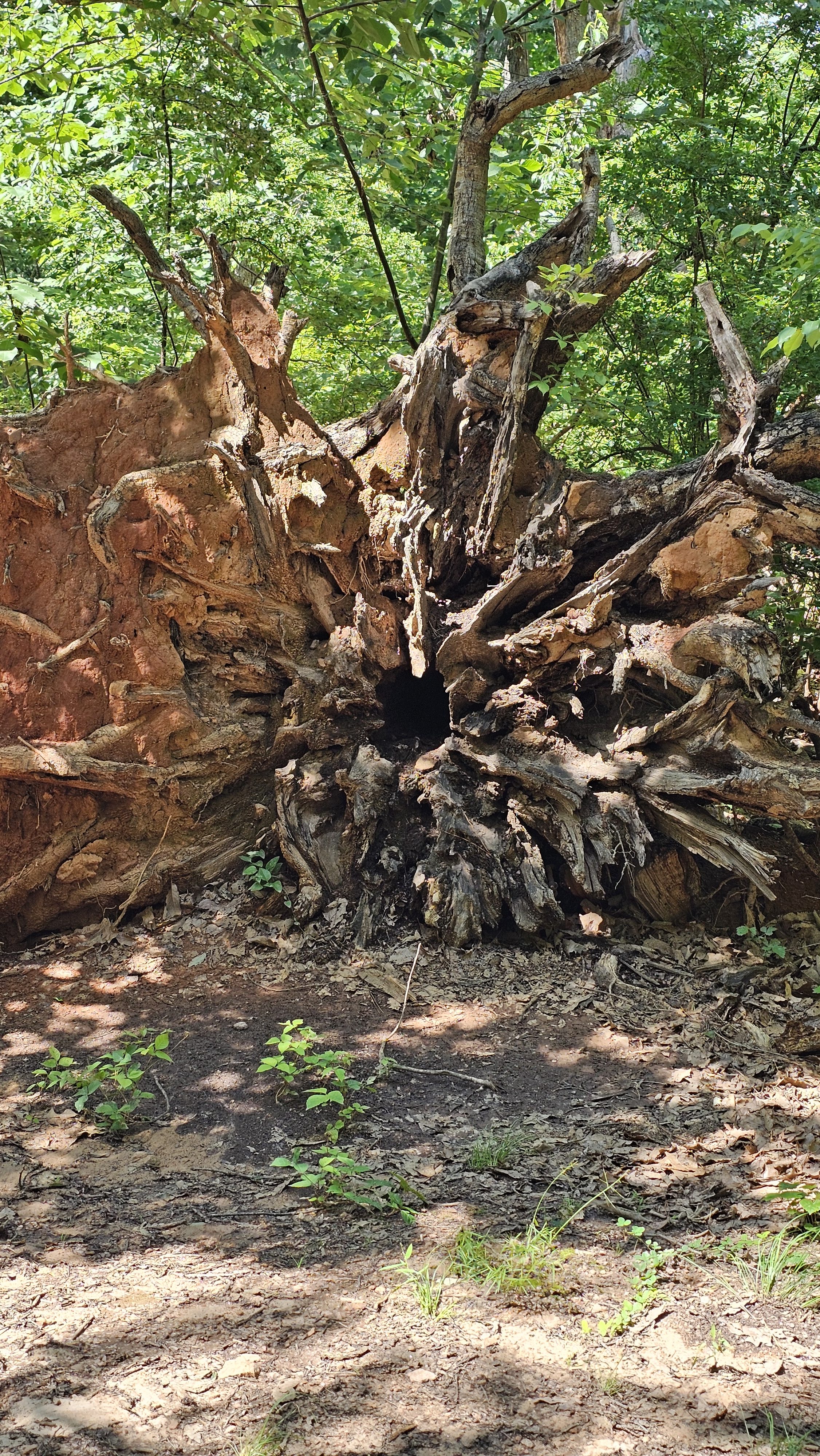
Yesterday, my wife and I went for a hike here in Georgia—a last-minute decision sparked sometime around 1:30 in the afternoon, the kind of plan that comes together more on instinct than intention. But even spontaneity has its roadblocks. Most of the trails near our place wind through Kennesaw Mountain, a site heavy with Civil War history—Confederate cannons still poised as if waiting, statues carved in reverence, and museums that feel like they’re trying too hard to remember the wrong side of things.
Neither of us felt comfortable walking through that sort of curated nostalgia. So we kept searching, scrolling through park listings and trail maps until we found a quiet spot not too far away—no monuments, no ghosts, just trees and trail.
We threw on our boots and headed out. The hike was gorgeous—sunlight filtered through the canopy in ribbons, the air smelled like warm earth and green things. As usual, I brought my Sony a7iii, convincing myself I might use it. I didn’t. It hung off my shoulder like a very expensive mistake, while my Galaxy S23 did all the real work, snapping quick photos and short videos along the way. I really ought to stop bringing the Sony on these kinds of hikes—it’s just extra weight I carry out of habit.
Still, it was a good day. One of those slow, quiet adventures that sneaks up on you and stays a while.
License to Shoot
License to Shoot: A Bond Girl Photoshoot
I’ve been under the spell of James Bond since childhood—specifically, since my father, in what I now recognize as a pivotal act of cultural initiation, sat me down to watch The Living Daylights. Timothy Dalton, sharp as a dagger and smoldering with restraint, was my first Bond—and you never quite forget your first. While the world collectively genuflects before Sean Connery, I remain part of the apostate sect who believe Dalton brought something darker, something truer to the literary Bond: a man caught between duty and self-destruction.
From there, I spiraled gloriously. I’ve seen every Bond film more times than I care to count (or admit), not just as a fan but as a student—examining lighting, color theory, composition, costume design. I studied them the way one might study ancient texts, or deconstruct a fever dream. The Bond universe became, for me, a mythos of aesthetics and archetypes—elegant violence in a tailored suit.
A few years ago, my longtime friend, model, and enduring muse Maeve approached me with a gleam in her eye and a question on her lips: “What if I played a Bond Girl?” Not just any Bond Girl—Xenia Onatopp, that high-camp avatar of lethal sensuality. Of course, I said yes before she’d finished the sentence. That shoot was a glorious collision of style and subtext: velvet shadows, wicked smiles, power and performance stitched into every frame. It awakened something in me—a hunger to do more with this theme, to build something larger out of the world I’d loved for so long.

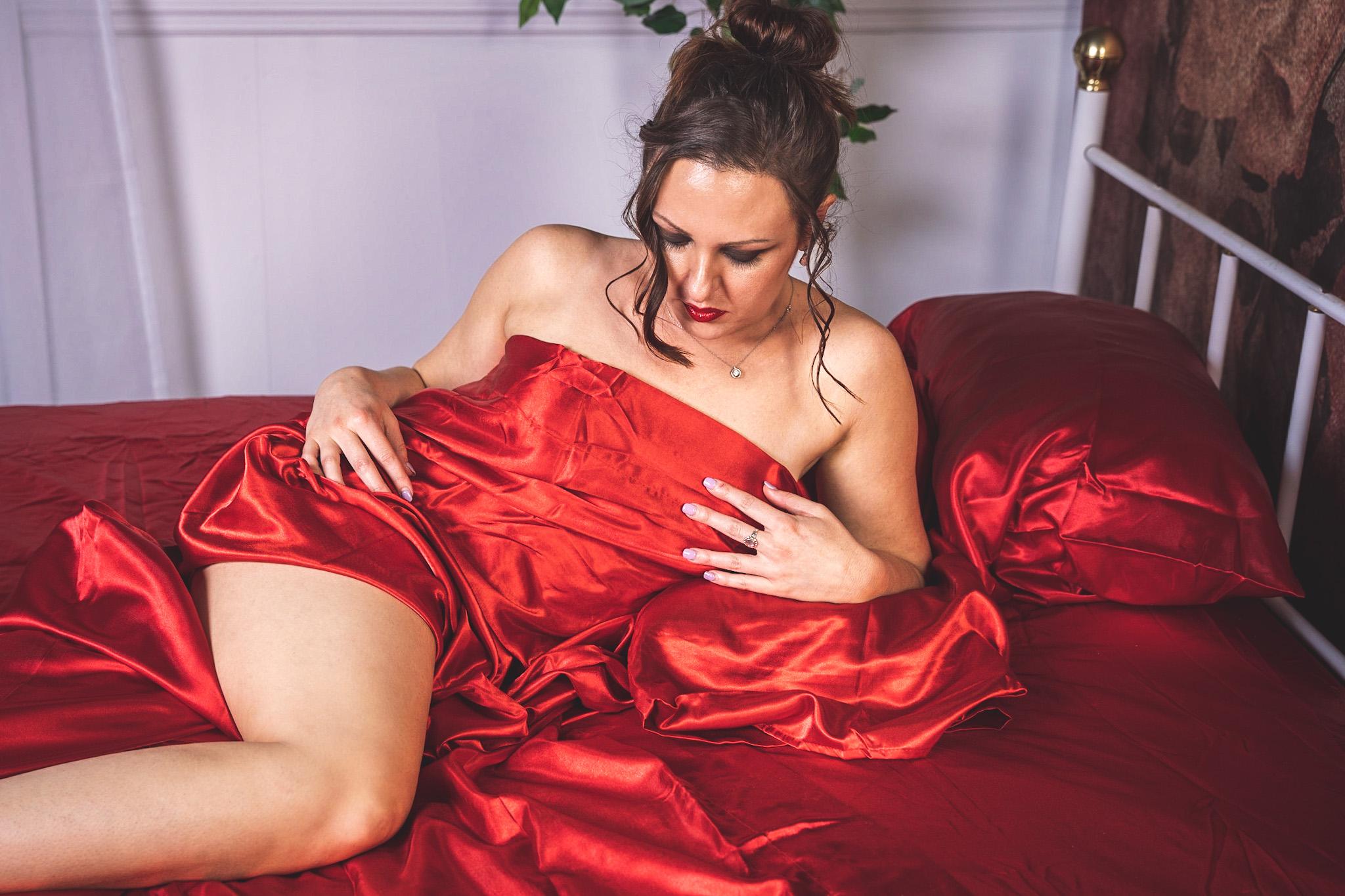
Fast forward to the present. I decided it was time to return to the world of spies, stilettos, and shadows. I reached out to several new models—Heather, Mackensie, Morgan, and Hunter—all artists in their own right, each with their own edge, grace, and mystery. We met in downtown Atlanta, our city of glass and grit, and transformed it into a living soundstage. Rooftops became rendezvous points. Alleyways whispered secrets. Laughter echoed off brick and concrete as we channeled elegance and espionage beneath the Southern sun.
Every photograph was a collaboration, a dance of glances and lighting, attitude and atmosphere. While editing, I leaned into a film noir palette: deep blacks, sharp contrasts, the quiet menace of chiaroscuro. And for the first time in my career, I brought out my Canon AE-1 and loaded it with black and white film. There’s something sacred about shooting analog—it slows you down, makes you breathe, forces intention into every frame. It felt right. It felt Bond.
The results? Nothing short of electric. These weren’t just photos; they were stories mid-sentence—freeze-frames of intrigue, moments charged with glamour and danger. I looked through the final images and saw not just Bond Girls, but icons in their own right. Women who didn’t need rescuing. Women who were the storm.
I can’t wait to work with these remarkable models again. There’s more in this world to explore—more themes, more tension, more romance dressed in danger. And in the spirit of Bond himself, I’ll keep chasing the next beautiful shot, the next story told in shadow and silver.
After all, what is photography but espionage with light?
[ngg src="galleries" ids="57" display="tile"]

Artistic Integrity: Making Choices That Serve the Work
Artistic Integrity: Making Choices That Serve the Work
When I was in high school, I attended a local community play. I don’t remember much about the story, but I do remember two things:
1. The cast was made up entirely of underage high school students.
2. There was a scene where two female actors sat on a park bench, having a conversation while smoking stage cigarettes.
At the time, the choice to have them smoke felt strange—out of place. The actors were clearly inexperienced with smoking, and it added nothing to the dialogue or the overall performance. It wasn’t a pivotal moment in the story, nor did it serve any artistic purpose. So why include it? Why did the director make that choice?
Later, it came to light that the director had a disturbing attraction to underage girls and a fetish for women smoking. In hindsight, his choice made perfect, unsettling sense—it wasn’t about the art. It was about his own desires, disguised as a creative decision.
That experience has stayed with me. As a photographer and artist, I often reflect on that moment in the audience—the feeling that something was off, even before I understood why. It serves as a constant reminder to question my own creative choices. Am I making this decision because it enhances the art? Or is it serving something personal, something unrelated to the work itself? If I find that it's the latter, more often than not, I remove it—because I remember.
I sometimes see artwork on social media that makes me wonder about the motivations behind its creation. But to be clear, I don’t believe it’s inherently wrong for artists to make personal choices in their work. Art is often deeply personal. Some of the most profound pieces in history were born from an artist’s private emotions, desires, and experiences.
Art is also subjective—what speaks to one person may not resonate with another. But I do believe that as artists, we should always take a moment to examine our intentions. Are we making choices that truly serve the piece, or are they fulfilling something else? Learning to distinguish between personal impulses and artistic integrity is an ongoing process, but it’s one worth pursuing.
Because in the end, great art isn’t just about what we want to create—it’s about what we choose to share with the world

Firefly Valentine's Day Cards
Firefly Valentine's Day Cards
A few years back, while tumbling through the vast, uncharted regions of Tumblr, I stumbled across a set of Firefly-themed Valentine's Day cards. Now, being the self-respecting Browncoat that I am, I immediately downloaded them without hesitation. And, like a loyal smuggler running the same route year after year, I've used those cards every Valentine's Day since. Why? Because when you find gold in the 'verse, you don’t just leave it behind.
Firefly is one of those rare gems of television history: a brilliant, quirky, and endlessly quotable show that was canceled far too soon. Fourteen episodes (and one movie) were all we got of this space-western masterpiece. Fourteen episodes to fall in love with Captain Mal's stubborn heroics, Wash's dinosaur obsession, Zoe's unwavering badassery, Kaylee's sunshine-in-engine-grease personality, and Jayne's... well, Jayne's cunning hat. And yet, despite its tragically brief run, the show still resonates, as fresh and relevant today as when it first took to the skies.
Every year, without fail, I carve out a little time to rewatch the series and Serenity, the cinematic epilogue that tried to give us some closure. And every year, I find myself mourning the lost potential. What adventures might we have witnessed if the show had been given a fair chance? What other shenanigans could our favorite misfit crew have gotten themselves into? What new characters, planets, and philosophical musings might have joined the tapestry of the 'verse? We'll never know. And that, my friends, is the true heartbreak.
But if there really is a multiverse out there, as some quantum physicists (and every sci-fi fan) suspect, then somewhere, in some alternate reality, Firefly got its due. There are ten, maybe fifteen glorious seasons of Captain Tightpants and company navigating the black. Perhaps there's a spin-off or two. A crossover with Doctor Who. A Jayne Cobb workout tape. Somewhere, out there, people are still excitedly discussing new episodes of Firefly. And I can't help but envy those alternate-reality bastards.
In the meantime, here I sit, printing off the same Firefly Valentine's cards and handing them out with a nostalgic smile. Because even though the show is gone, it left behind a little piece of magic. Love keeps a ship flying, after all. And as long as we keep sharing, quoting, and rewatching, the Serenity will never truly be grounded.
Happy Valentine's Day, fellow Browncoats. Stay shiny. And remember: you can't stop the signal.
[ngg src="galleries" ids="50" display="tile"]