DragonCon 2026 - The Good, The Bad, The Needs Improvement
DragonCon 2026 - The Good, The Bad, The Needs Improvement
DragonCon is, sadly, once again over. Me and 75,000 of my closest friends have all returned home to rub our sore feet, recover from various forms of con crude, and most important, sleep for long periods of time in the vain hope of feeling human again.
I you have never been to DragonCon before you might wonder why someone would subject themselves to something that has such serious after effects, and the answer is simple. DragonCon, regardless of the price to be paid, is, and always has, been worth it.
I attended DragonCon for the very first time in 2008. I was visiting my Uncle and cousins in Atlanta, and on a bright sunny Saturday morning my Uncle Jerry called and told my cousin Jeremy and I that there were a bunch of folks walking around in cosplay downtown, and maybe we might want to come down and check it out. So, we hopped into the car, drove downtown, and walked into DragonCon.
I had no idea, at the time, just how much that single decision would affect my life. Looking back, knowing all the ways DragonCon would change my life, I often wonder what my life would be like, today, had I not ever attended that first DragonCon.
In 2008, security was a lot less than it is today, so Jeremy and I were able to walk right into the Marriott, the Hilton, The Westin, and the Sheraton without anyone so much as giving us a second glance. True, we couldn't get into any panels, but we weren't really interested in the panels. We spent the day just wondering the hotels, taking pictures of the various cosplays and costumes. It was, a lot of fun, and I left DragonCon, that night, determined to return the next year, with a badge, and experience the full thing.
Fast forward to 2026, and I am attending DragonCon again. This time with a lot of experience and past DragonCons under my belt, and as soon as I walked into the Marriott, I could breath a sigh of relief. I was home. I was among friends. I was safe.
All that said, this year, in the year of our lord 2026, DragonCon had it's ups and it's downs. It wasn't the worst year, in my experience of attending, but it certainly wasn't the best. Most, if not all my criticism of this years DragonCon can be squarely laid at the feet of the Courtland hotel (formerly the Sheraton). I won't go into a lot of detail, other than to say, the Courtland made it very Very VERY clear that they do not want to be part of DragonCon anymore. Which is disappointing, and honestly baffling, in my humble opinion. But, I think this year, and all the issues with the Courtland, from badge pickup, to room nightmares, to broken sewer lines, are proof that DragonCon needs to evolve. Perhaps, in a future post, I will jot down a few thoughts on ways, I think, DragonCon could and should change, but not today.
Today, I just want to focus on how good it felt to be home, and, even though my phone was ruined due to rain, and the fact that I picked a couple dud panels, I really loved being there.
This year, I did something I have never done before. I participated in the Marriott floor show. Again, if you've never been to DragonCon before you probably have no idea what I am talking about, so, let me explain...
The Marriott is sort of the central hub of DragonCon, and when the sun goes down all the best cosplays, and more migrate to the Marriott. On the main 3rd floor level, near the back, people in large cosplays will often stand in a single spot in order to be seen and photographed, but, people also, set up fun little displays and interactive events. For example, last year, there was a Swedish fish glory hole...use your imagination.
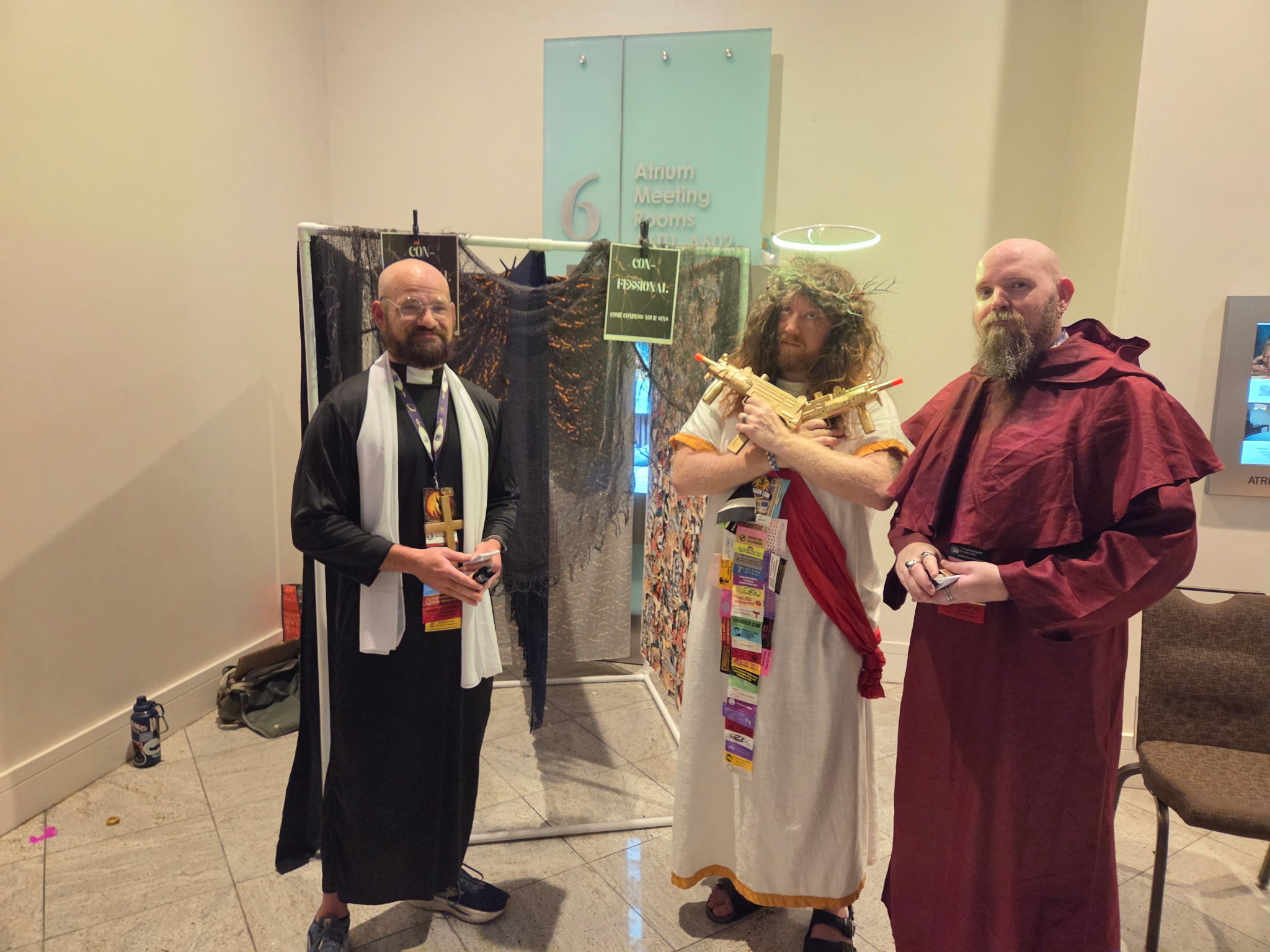 I've never participated in the floor show, but a few months ago I had an idea, The Con-Fessional. I wanted to set up a confessional booth and take peoples confessions. No I'm not a catholic, I just like making fun of religion. I posed my idea to my buddy Eric and he was 100% onboard, so, we bought a couple priest outfits from Spirit Halloween, and set up a confessional booth using PVC and some extra fabric Leslie had laying about.
The booth was an absolute hit. Before the con I had 250 Con-Fessional ribbons printed to be handed out to anyone who made a confession. We left DragonCon with 37 left.
So, I think the Con-Fessional will certainly be returning to DragonCon in 2027.
There is so much more I could talk about and speak on when it comes to DragonCon, but, it is only Wednesday, and I will confess, I am tired. So I will leave you with this...
While DragonCon 2026 had it's issues, DragonCon is great. It's still worth the long lines, the ATL heat, and all the sweat. Because, I'll say it again, DragonCon is home.

The First Spirit Halloween Store Visit of 2026
The First Spirit Halloween Store Visit of 2026
I ventured out today.
I know, I know… Why would I do that?! There are people out in public, and you make a compelling point, but I had a very good reason to put on pants and leave the house today.
It was my first official trip to a Spirit Halloween store this season.
See, I told you it was a good reason.
In just a few short days, we will enter into the "ber" months, starting with September, which, every sane and rational person knows, is the start of spooky season. Traditions abound in the early "ber" months, orange lights, pumpkins, hot apple cider, simmer pots, and more, just to name a few.
Whenever September begins, I can feel my soul breath a heavy sigh, release some of the tension in it's jaw, and become a little bit happier, because, this is my favorite part(s) of the year.
And, all of it usually starts with a traditional visit to a Spirit Halloween store.
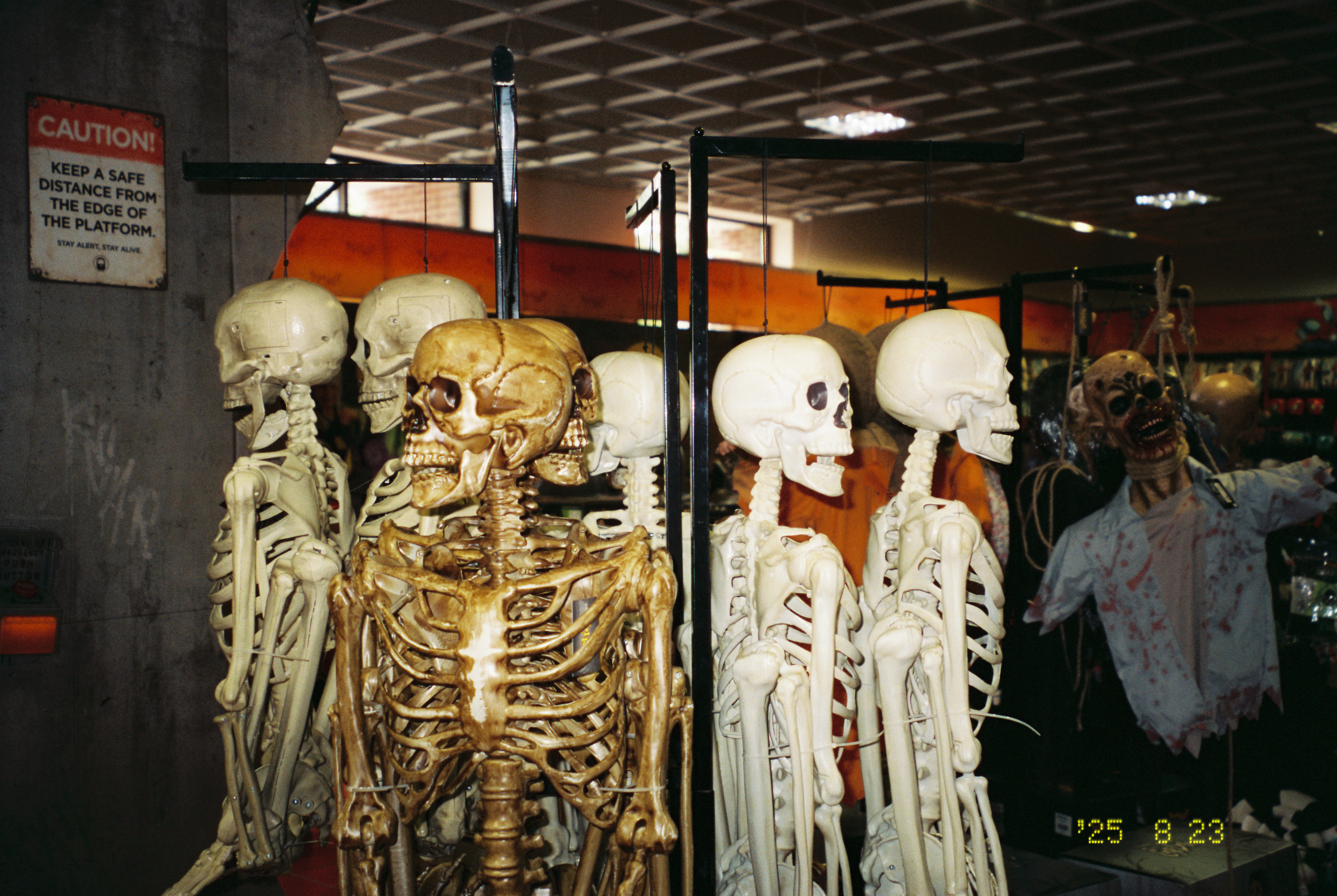
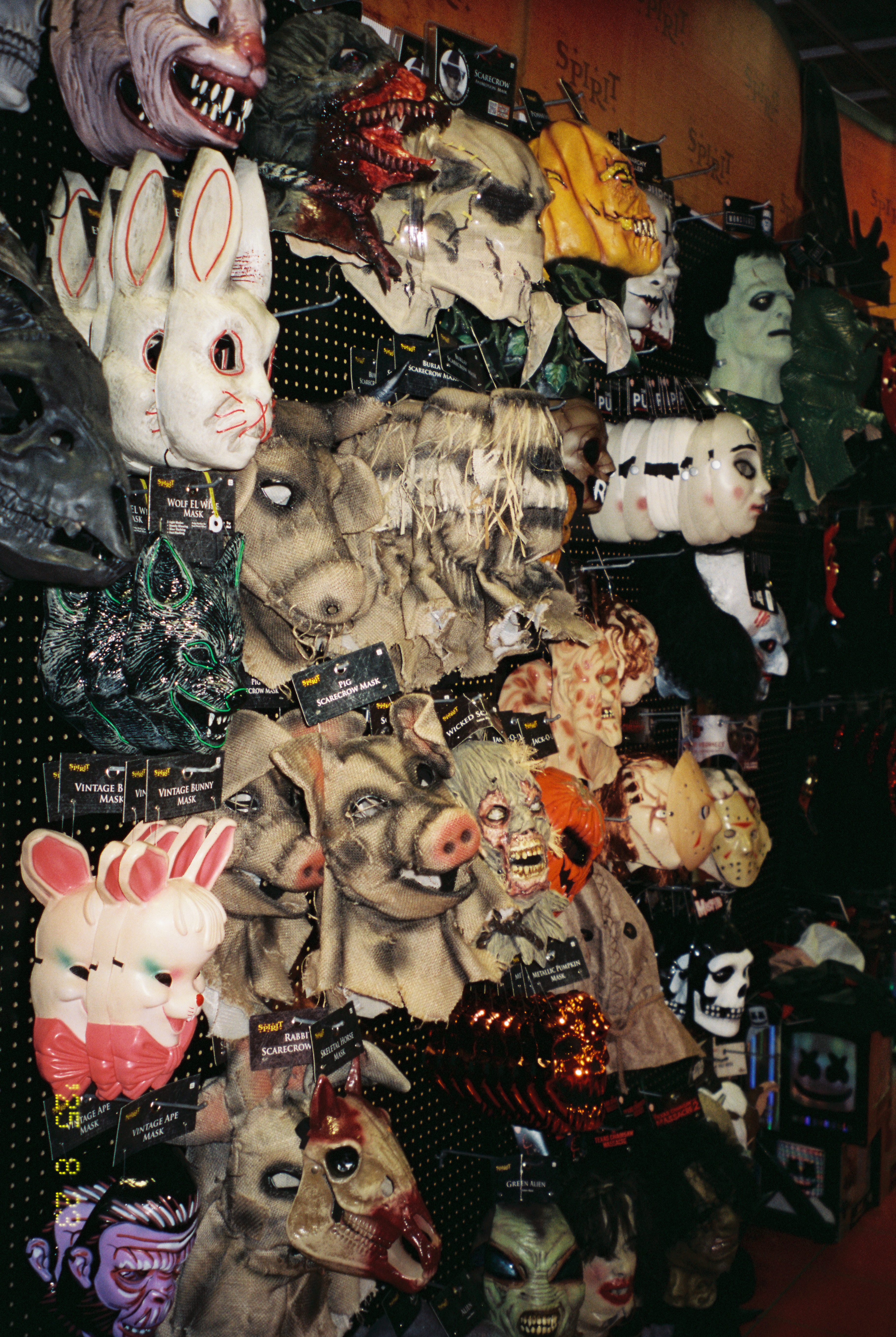
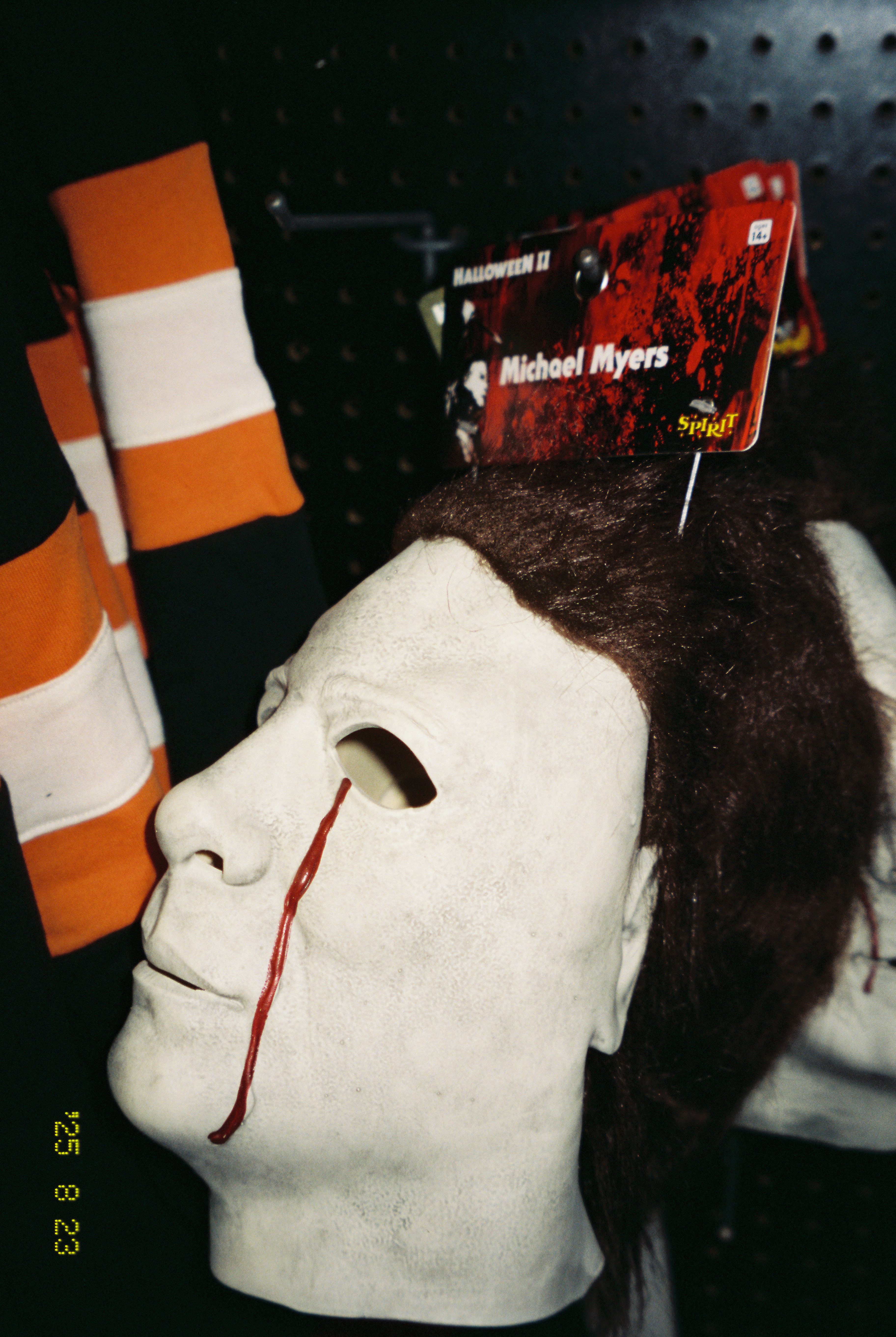
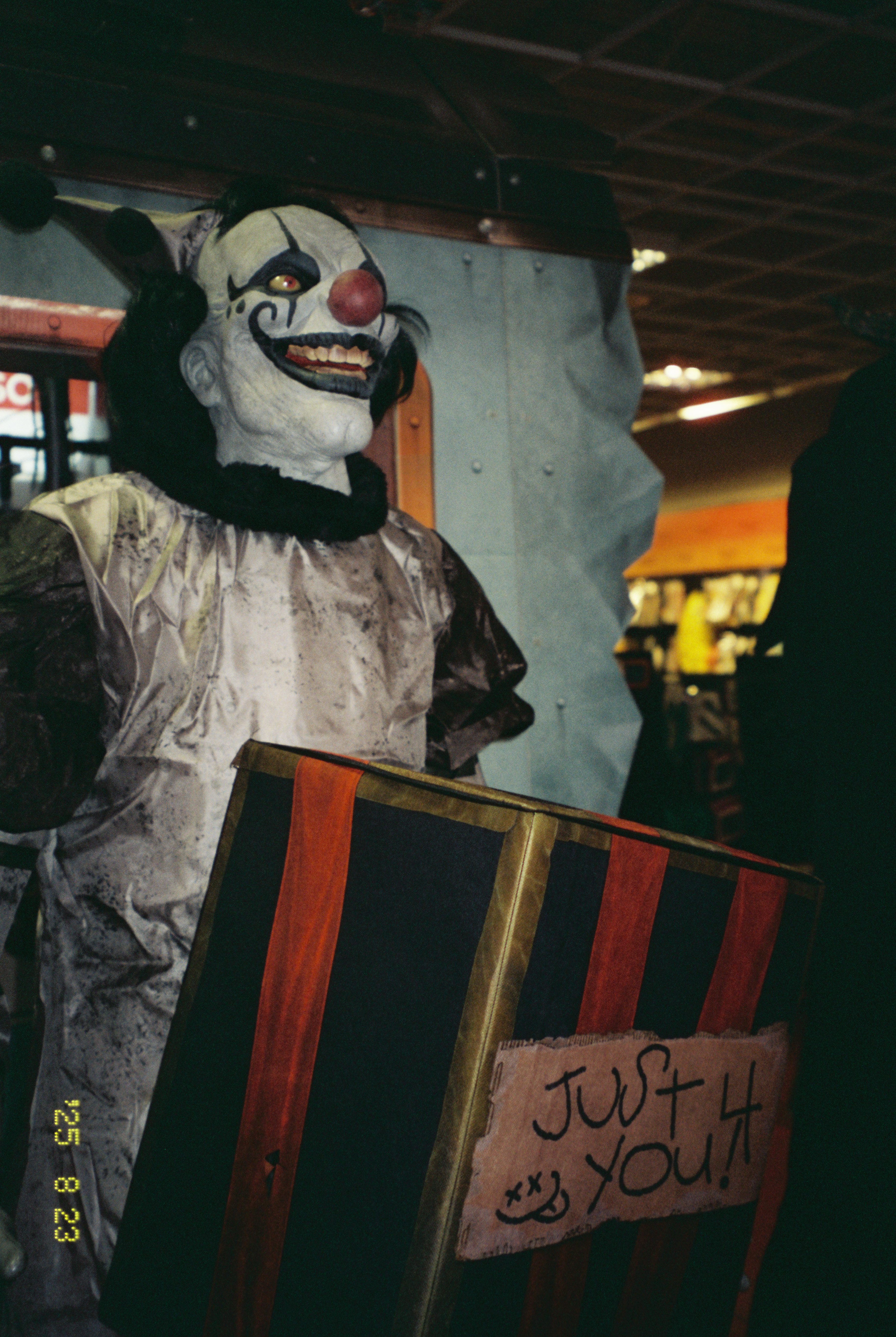
Last year, I had just recently purchased a new 35mm film camera, and was anxious to try it out, so, loaded with a Kodak 400 roll of film I ventured into Spirit and walked around taking pictures of the various masks, home decor, and costumes that so many of us have come to love.
I'm sure I looked somewhat crazy, considering I was shooting on an old Olympus mju ii camera with flash, but thankfully, I stopped caring what strangers thought of me long ago. I wanted to repeat the Spirit Halloween photoshoot today, and I even had a new point and shoot camera I had won in a raffle at the last ATL Shooters event, but, sadly, I purchased the wrong batteries for it, and had to leave it in the car, while I ventured into the store.
I'm sure, before Halloween is over, and the Spirit Halloween stores revert back to abandoned buildings, I will get in there, and take some cool film photos, but, for now, enjoy these images from last year.
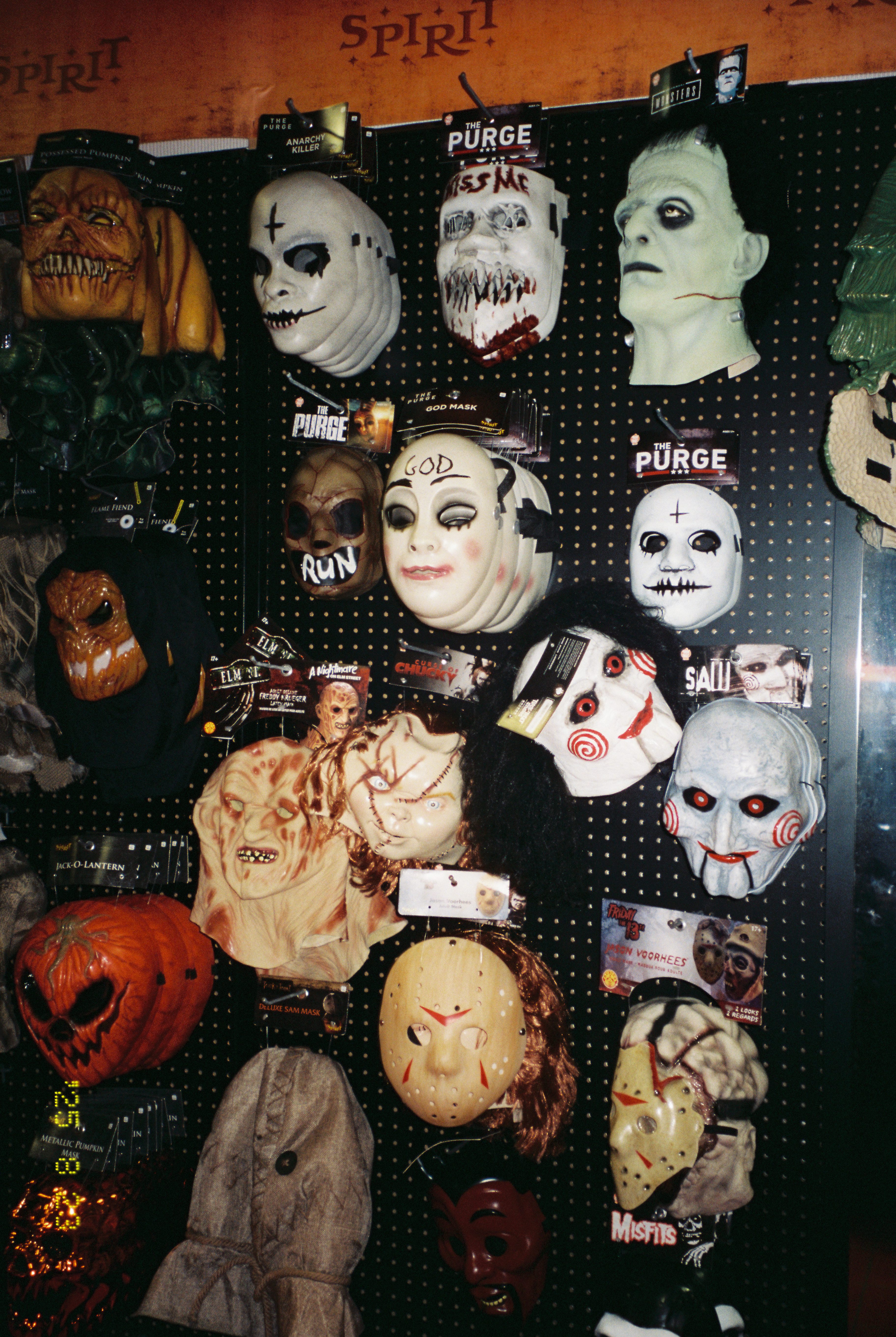


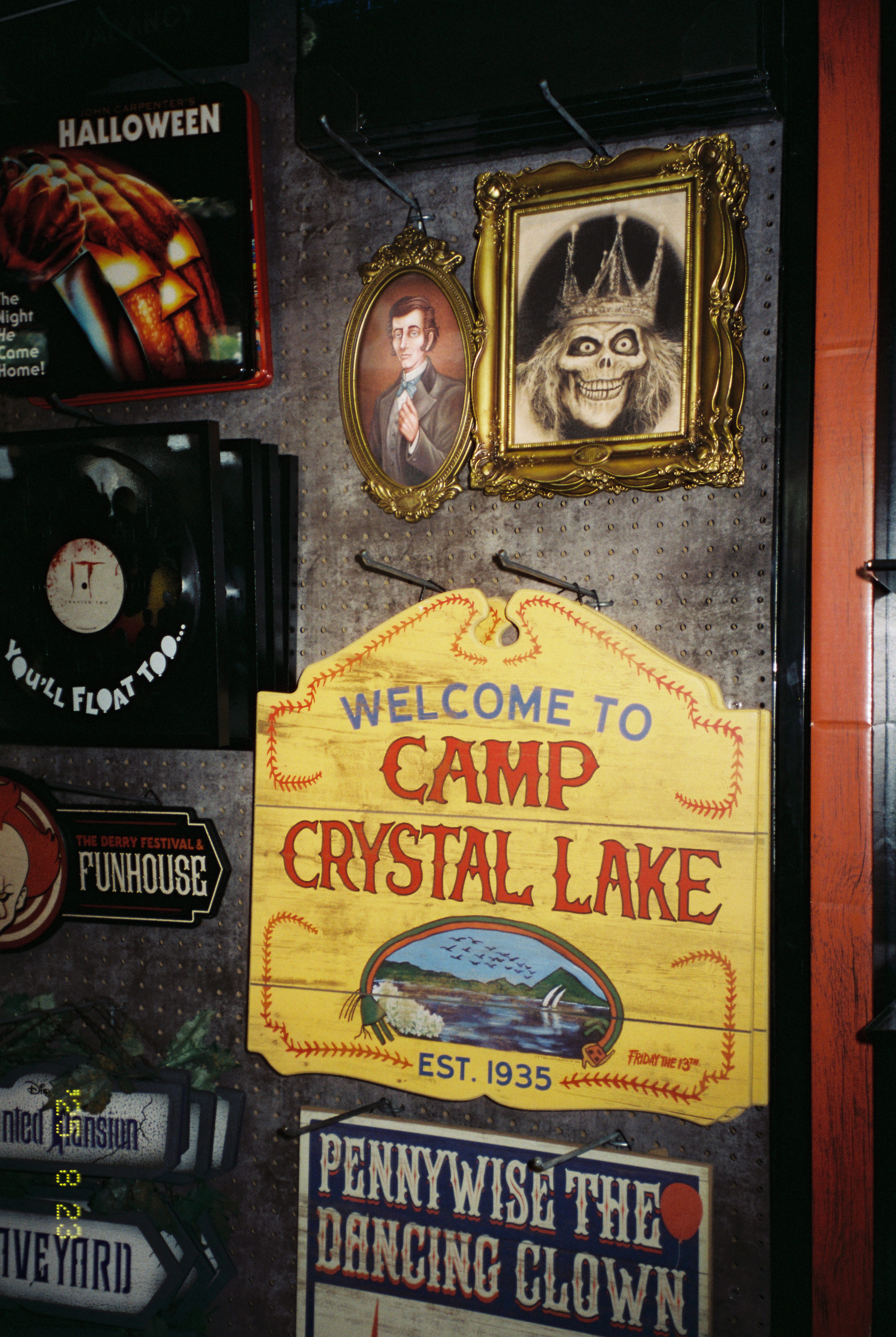

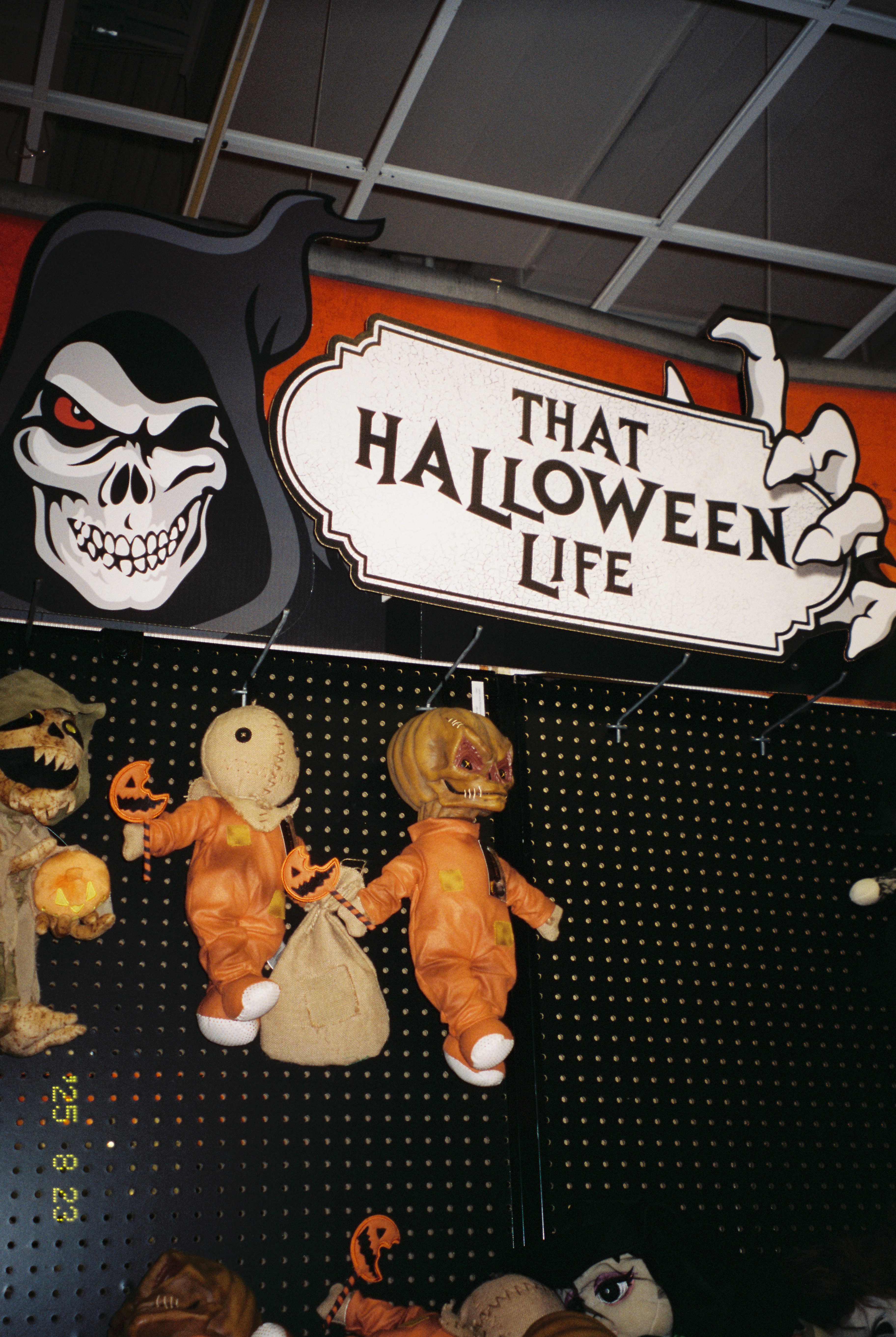
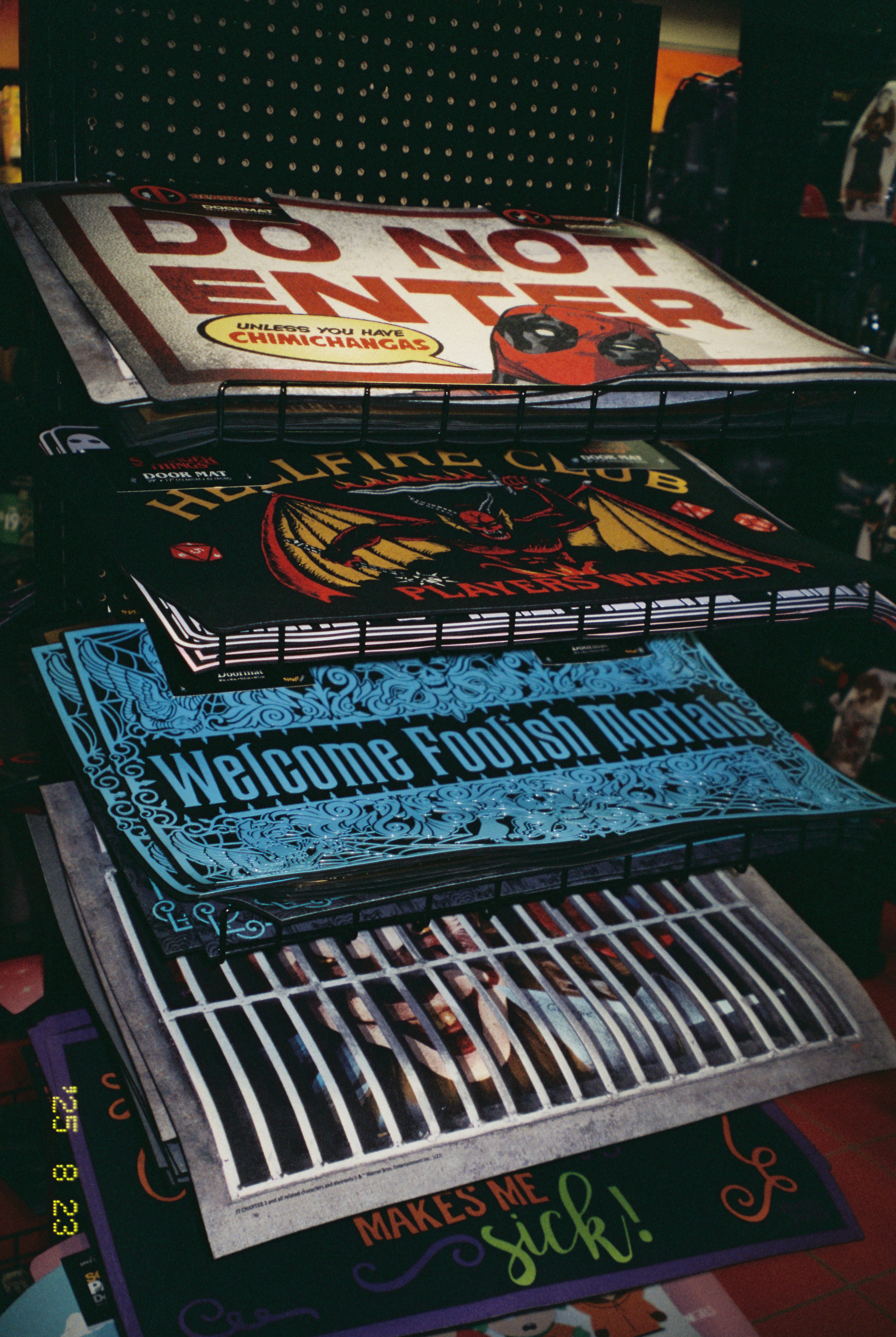

Imposter Syndrome
Imposter Syndrome
Yesterday, I was reading through some Substack articles, and came across this one, by Olivia.
Psychological pattern in which people doubt their accomplishments and have a persistent, often internalized fear of being exposed as a "fraud"
I wish I could say that I'm immune to imposter syndrome. I'm not. I wouldn't say its a constant fear or companion, but every few months, I'll look at the body of my work as a photographer and artist, and simply want to burn all of it in flame. For a brief moment, I'll be certain that nothing I have ever created matters, that others are greater than in every way, when compared against me, and that I should just give up and never pick up a camera again.
These feelings, while intense, are usually brief. Only lasting a day, at most. I will usually wake up the next day feeling pretty good about my talent, ability, skill, and overall body of work. But, when I am in the middle of feeling doubt, it's a heavy emotion to live through.
Recently though, I have approached my art, photography, skill, and ability a little differently.
As I have mentioned in previous posts, I have been consuming a lot of art work from the renaissance period. Artists, sculptors, painters, and more. So many of them creating beautiful works of art, some at a very young age. When I think of how little time they had to learn, practice, fail, and then try again, in order to achieve and create some of the worlds most beautiful works of art is staggering. It makes my own 10 years or so, as a photographer, seem...lengthy by comparison.
What also stands out to me is how many of the artists of the past thought they were utter and complete failures. Vincent van Gogh is a good example of both an artist who achieved greatness at a young age, and an artist who, for several reasons, thought he was a failure. It's hard, for many of us, to look at his work, and understand why he thought he was such a miserable mess, but he did.
If Vincent van Gogh, despite his obvious talent and skill, thought he was no good, what hope is there for the rest of us? Might be the question some of us would ask. But, I think we need to look at it from a different angle, and ask a different question.
If, Vincent van Gogh thought he was a failure, despite his obvious talent and skill, is that not proof that imposter syndrome is nothing but a lie? And, if imposter syndrome is a lie, which it usually is, does that mean that we should all start radically becoming our biggest fans? Put the doubt aside, because it has only limited us, and instead choose to have absolute faith in ourselves, our abilities, our talent, and skill.
True, some people might find this attitude crazy, maybe even arrogant. Yes, they might try to belittle us for our enthusiasm and self-esteem. But, I have never really seen why their opinions matter. If someone, regardless of who they are, or their relationship to you, tries to tear you down, they are, by default, not worthy of being in your life. So allow them their misguided opinions and move on.
So many of us have magic inside of us, and we share that magic through our respective forms of art. Sadly though, many people, who have no magic of their own, try to dim the light of those that wield it.
So yes, imposter syndrome is a real thing that many of us struggle with, but, we are made of stardust, and hold galaxies inside our very bones. So the next time imposter syndrome rears its ugly head, let us remember that it does not speak truth, only lies.
Finding Energy, Not Just a Model: The Art of Intentional Collaboration
Finding Energy, Not Just a Model: The Art of Intentional Collaboration
My wife said something to me over the weekend that I haven't been able to stop thinking about. She said, "You're very intentional with the people you work with on creative projects."
She isn't wrong, and ever since she said it, I haven't been able to stop thinking about it, and mulling over the reasons behind it.
When I started learning photography back in Olympia WA, oh so many years ago, I was somewhat desperate to find people to photograph. I remember, asking a couple I knew, if they would be willing to pose for a few photos for me to practice on. They were polite about it, but they turned me down. I remember getting off the phone with them and being very embarrassed. But I kept going, and kept practicing. I might not have actual people to photograph, but I would buy flowers from the store, or I would take photos of a yoga class being held at the gym I owned. I took a lot of candid portraits of friends and family members. Basically I would take any and every opportunity to use my camera that I could.
That was over 10 years ago, and I've pressed the shutter button on my camera thousands of times now. Thankfully, I eventually found people to work with, but I have learned just how important it is that you match creative energy with a person, because when you don't it makes creating something special all the harder.
This morning I saw a video, posted on Instagram by David Suh.
David, in my personal opinion, is one of the most talented, patient, persistent, and dedicated photographers I have seen in a very long time. I don't know him personally, but he seems like a genuine and caring individual. That said, I have noticed, in some of his videos, he'll work with someone who is uncomfortable being in front of the camera. David is a master at helping folks find a pose that works for them, but helping those folks find that pose, takes energy. And while that works for David, it doesn't really work for me, and that's ok.
I like being selective with who I work with, I like dedicating my energy to the creative project, I like focusing on the art. My way isn't better than David's, and David's isn't better than mine. They're just different, and I think that is what matters more then anything, because we live in a world filled with copy cats and repeated viral trends. So those of us who chose to be different have the opportunity for real creativity and unique art.
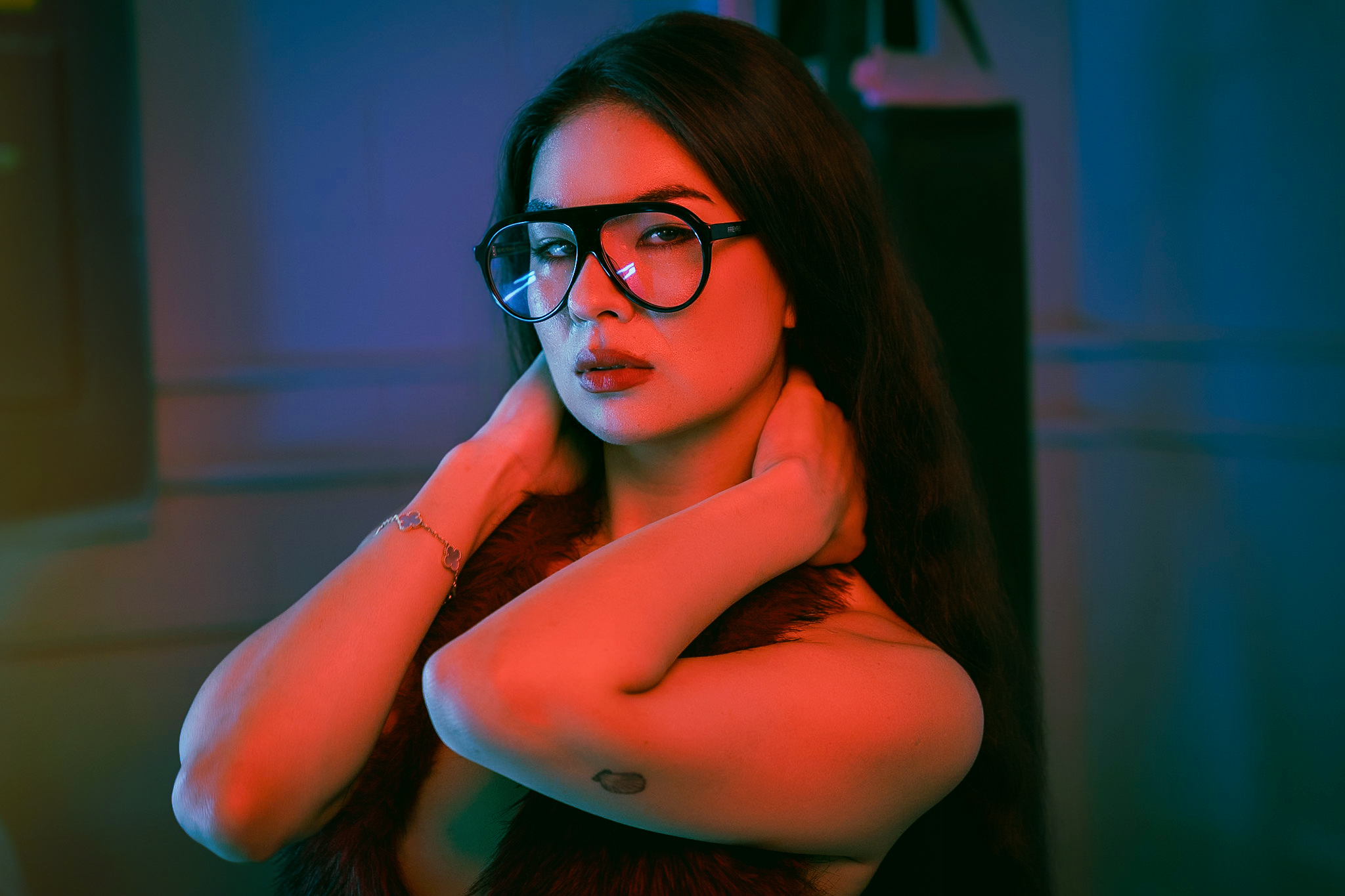
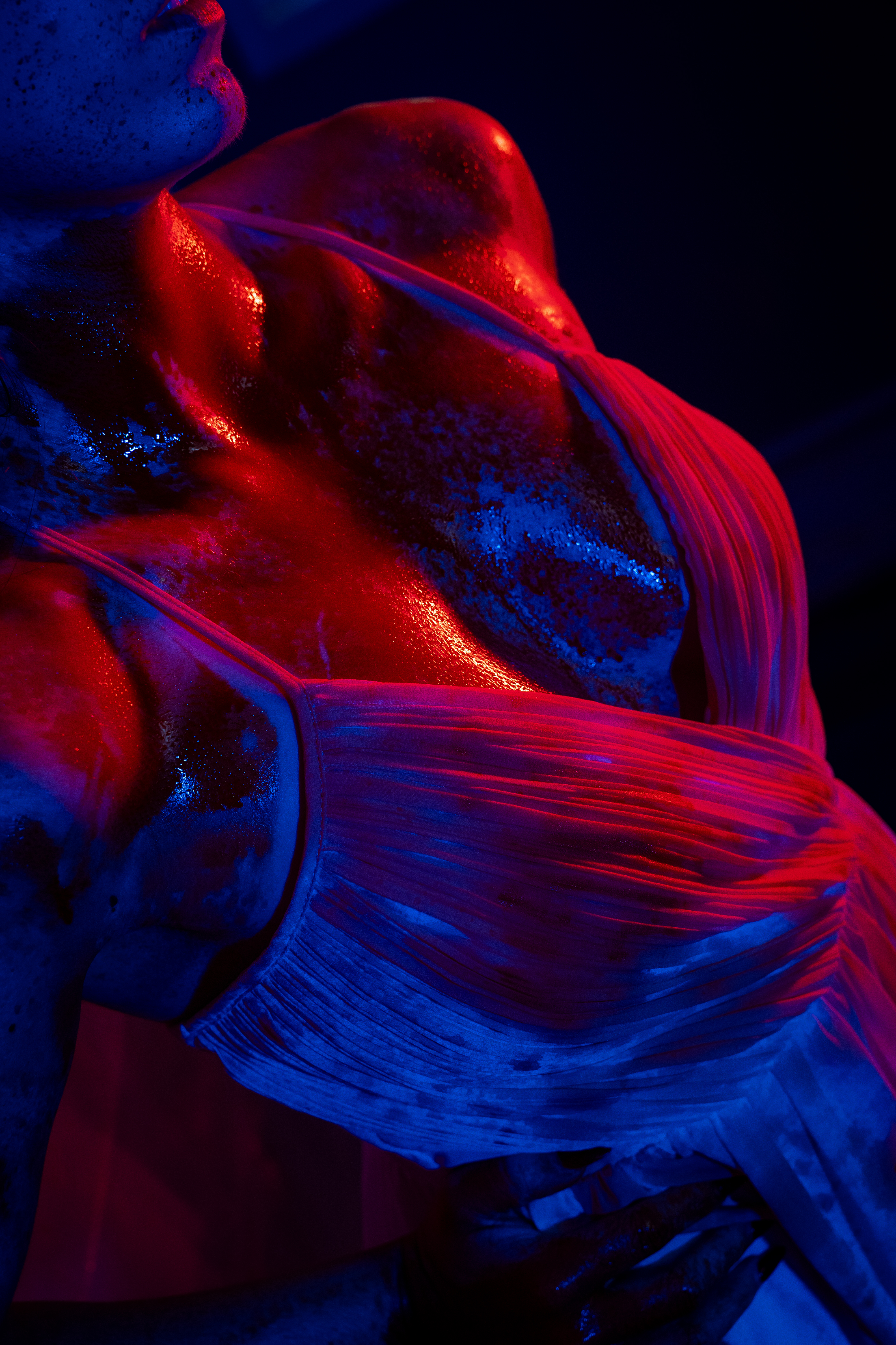
That's why, when Morgan asked me a few months ago, if I wanted to do a blood shoot with her, I was more then willing and incredibly excited to do so.
I bought some blood from Reynolds, and a new light from B&H and prepped, best I could, for a very cool photo shoot.
Believe it or not, finding photo inspo for a blood shoot is hard to find. Most of the images I was able to find were either rakishly armature, or overtly sexualized. Either way, I couldn't really use anything I found for much inspiration. Thankfully, I consider myself a halfway decent artist, with an impressively active imagination. So I had a rough draft, in my minds eye, for what I wanted the photos to look like.
Morgan, for her part, is a wonderful friend and model, who takes direction well, is incredibly patient, and always willing to try something weird. We shot for two hours, and we got some incredible shots, that I will share later, but here are a few BTS shots that show a little of the chaos and blood shed that happened on Sunday.
Stay tuned, for more to come.


I'm Sorry - Overcoming Anger
I'm Sorry
Yesterday, I had a conversation with my wife. I apologized to her. Not because I had committed some terrible sin, but because I recently noticed how angry and grumpy I had been as of late. Yes, yes, I know... You all have come to expect a certain amount of cynicism and sarcasm from me, and I promise, those things are not going anywhere, but, my anger at the state of things had moved away from a healthy disrespect for all things present, and started resembling more of an unhealthy personality trait. My poor therapist has had to endure more then one session that included me just rage talking against "the machine", and while those can be, occasionally, useful, I wasn't actually working on anything productive. I was just complaining about a bunch of things that I had no control over, and allowing those things to take purchase inside me, and start making decisions on my behalf.
I have always had a lot of anger and rage inside me, so it's sometimes easy for me to give into the feelings, but I'm not an angry teenager anymore who isn't in a safe place to express themselves, and I have worked hard to be able to communicate my feelings without putting holes in walls, like I did when I was 17.
So, I apologized to my wife, who has patiently listened to, and endured so many of my long rants about religion, politics, human beings stupidity, and AI. She deserves some sort of award for all she has put up with, or maybe a sushi date followed by frozen yogurt.
The point of all of this is, I am going to try to be less angry with *gestures at world* and work to be more positive about things. I've heard that you see what you focus on, and I have certainly been focusing on negative things recently, and as a consequence, all I see are more negative things, most of which are things I have no control over, and can not change.
Now, I will tell you what I told my wife. I am aware this change will NOT happen over night. As I mentioned before, anger is deeply embedded within my soul, and I am not going to stop rolling my eyes
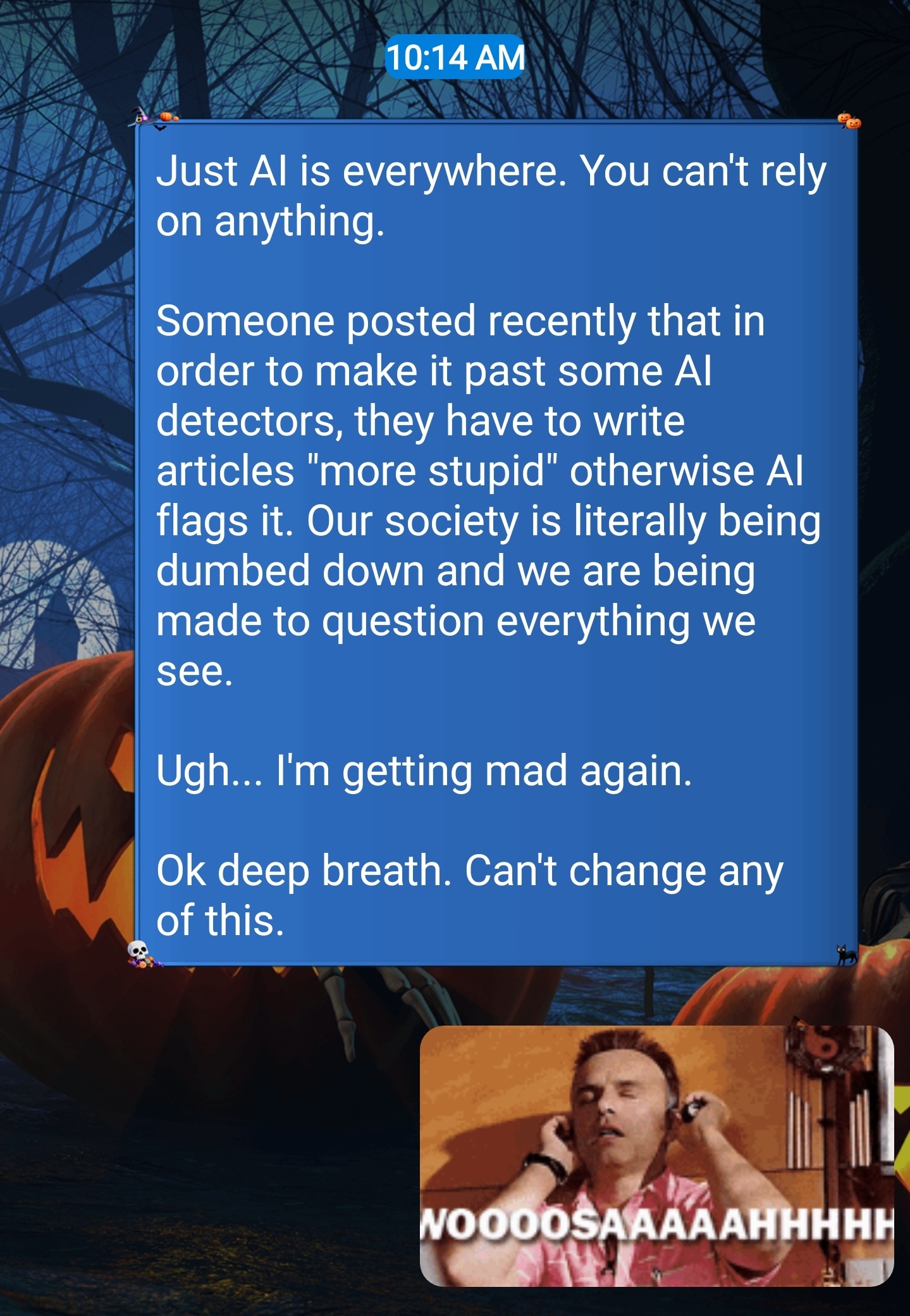 at the absurdity that is the human race, along with all its decisions. But, I am going to try to not focus in on it, like a sniper about to take a shot without any bullets. Because, like the sniper without ammo, that would be unproductive in nature. I can focus on all the things going wrong all I want, but at the end of the day, I can't change anything.
How am I going to do this? Good question... I have no idea. Right now I am trying to me more aware of when I do it, so I can pivot away from it. This text exchange between me and my wife is a good example of me trying to pivot. And, like the meme, I imagine I am going to be saying WOOOOOOOOSAAAAHHHHHHHH, a lot!
Why? Because, yes, there are a lot of very stupid things happening in the world right now, but I don't want those things to dictate my actions. How a person stands against darkness defines their character. And I would like to hope that I will not be thought of as an angry 17 year old who put holes in the wall of his parents house. I would like to hope that I, personally, can face the darkness without allowing that darkness to consume me, turning me into a different kind of darkness.
So, as I did with my wife, I'm sorry. I'm sorry for all the rants, complaints, and negative energy. I'm going to try and do better, to see better, and to live better.
Wish me luck.
Meta AI Image Generator
Meta AI Image Generator... Well... That's Not Terrifying At All.
So, go ahead and add another entry to the ever-expanding encyclopedia of Reasons Meta Sucks.
This week's exhibit? Meta's shiny new feature called Muse Image.
If you've somehow managed to avoid hearing about it, and frankly, I envy your blissful ignorance, here's the condensed version.
Users on Instagram can now mention someone else's username, ask Meta AI to generate an image using that person's likeness, and the system will pull from their public photos to create something new.
Read that sentence again.
Not your own likeness.
Someone else's.
Because apparently we've collectively decided that the biggest problem facing humanity was the lack of AI-generated versions of our friends, coworkers, exes, neighbors, and that one guy who comments on every post with "First."
What could possibly go wrong?
If your mind immediately started sprinting through a thousand worst-case scenarios, congratulations. Your pattern-recognition software is functioning normally.
Unfortunately, we are no longer living in an era where companies ask, "Should we build this?"
Instead, they ask, "Can we ship this before the next quarterly earnings call?"
 The distinction matters.
Technology companies have become convinced that the mere existence of an idea is justification enough to release it into the wild. Who knew a single quote from Jurassic Park would be so prophetic today?
Every new AI announcement follows the same script.
"Look what our model can do!"
Very little time is spent asking what people will do with it.
Because people are wonderfully creative.
And also, occasionally, absolute gremlins.
Meta describes Muse Image like this:
"Whether you want to design a custom event invitation, mock up a collaborative creative concept, or generate a personalized graphic, tagging a username lets Meta AI use public photos to build a visual that's ready to post."
Corporate copywriters deserve awards for their ability to wrap dynamite in pastel-colored wrapping paper.
Read that statement and you'd imagine coworkers brainstorming birthday invitations or a neighborhood bake sale.
History suggests... something else.
We've already watched this movie.
When Grok loosened its guardrails, it didn't take long before users discovered they could generate explicit images of celebrities, politicians, fictional characters, everyday people, and, horrifyingly, even children. It became a case study in what happens when powerful image generation collides with the internet's least mature inhabitants.
The technology wasn't the only problem.
Human nature was.
So forgive me if Meta assuring us that everything will be fine doesn't exactly fill me with confidence.
Because here's the question nobody seems eager to answer.
What's stopping someone from asking Meta AI to put someone in revealing clothing?
Or no clothing?
Or compromising situations?
Or fake crime scenes?
Or political propaganda?
Or fabricated "evidence" of events that never happened?
The answer, we're told, is safeguards.
I've worked with software long enough to know that safeguards have an unfortunate habit of becoming speed bumps for people determined to misuse something.
And if there's one thing the internet has consistently demonstrated over the last thirty years, it's that someone, somewhere, is already trying to figure out how to break whatever safety system you just finished building.
As a photographer, this lands a little differently.
Photography has always carried an implicit agreement between creator and viewer.
Someone stands behind a camera.
Someone chooses the light.
Someone composes the frame.
Someone presses the shutter.
There's intention.
There's authorship.
There's craft.
When I upload my work online, I know I'm granting platforms certain licenses necessary to display and distribute those images. That's the bargain we've all reluctantly accepted.
But somewhere along the way, that agreement quietly evolved into:
"Thanks for uploading your life's work. We're also going to feed it into our AI systems."
That's... considerably less appealing.
I do not want my photographs training image generators.
I do not want years of creative work becoming statistical soup inside an algorithm.
And I especially don't want that happening simply because I chose to share my work on Instagram.
Yet here we are.
Legally, Meta has written itself an extraordinarily comfortable seat at the table.
Ethically?
That's a much murkier conversation.
So what do I do?
Honestly...
I don't know.
There's an increasingly loud part of me that wants to delete every photograph I've ever posted to Instagram, close the account, and quietly wander off into the woods where Wi-Fi signals fear to tread.
Would that stop AI?
Of course not.
The train has already left the station, picked up speed, and someone keeps shoveling venture capital into the engine.
But at least I wouldn't be handing over more coal.
I've said it before, and I keep coming back to the same thought:
This isn't the future we were promised.
I grew up believing technology was supposed to inspire wonder.
New computers felt magical.
Software updates were exciting because they introduced genuinely useful features, clever interfaces, or delightful little surprises. Companies competed to build better products, not merely louder ones.
Even the packaging had personality.
Opening a new gadget felt like opening the first page of an adventure novel.
Now?
Every company is racing toward exactly the same destination.
Everything has AI.
Everything has a chatbot.
Everything wants to summarize your emails, rewrite your messages, generate your photos, answer your questions, and somehow make your coffee while reminding you to subscribe to a premium plan.
Every product is slowly becoming the same beige bowl of technological oatmeal.
Perfectly optimized.
Perfectly data-driven.
Perfectly forgettable.
Maybe that's what disappoints me most.
I was there when the internet arrived in the mail on an AOL CD.
Back then, getting online felt like discovering an unexplored continent. Every website was somebody's weird little corner of the universe. It was messy, occasionally broken, deeply personal, and endlessly fascinating.
The web wasn't polished.
It was alive.
Now it increasingly feels like wandering through an endless shopping mall where every storefront has been replaced by the same AI-generated display window, curated by algorithms that know exactly how long you'll stare before scrolling.
Perhaps I'm becoming the old guy yelling at clouds.
That's entirely possible.
But I'd like to think there's still value in asking whether every technological advancement is actually progress.
Sometimes innovation isn't about doing something because you can.
Sometimes the more important question is whether you should.
And right now, that feels like a question the people building our digital future have quietly stopped asking.
Ink, Wax, and the Lost Art of Letter Writing
Ink, Wax, and the Lost Art of Letter Writing
Let me tell you something true about myself, a thing I don't say lightly because the truth has a way of sitting in your chest like a stone you've been carrying so long you forgot it was ever heavy.
I was never cool.
Not in the effortless, magnetic, people-just-gravitate-toward-you way. Not even in the weird, ironic, so-uncool-it-loops-back-around way that becomes its own currency in certain coffee shops. No. I mean I was the kid at recess inventing elaborate solo games because the alternative was standing near other children and hoping, desperately, that proximity would be mistaken for belonging. It was not. Elementary school is a brutal ecosystem, honestly closer to a nature documentary about pack behavior than anything resembling civilization, and I was reliably at the bottom of the food chain.
Middle school didn't improve my standing. High school gave me the gift of anger as a coping mechanism, which is the kind of gift that arrives without a receipt and ruins several holidays. On my best days I was chaotic, a live wire someone had coiled into a desk chair and told to pay attention to algebra. On my worst days I was something darker, something I'm not proud of, something that lives in the past where it belongs. I grew up convinced, bone-deep, that I was less than. That the default human experience included a dignity and ease I had somehow been issued without, like arriving at a camping trip to discover everyone else got a tent.
I am forty-five years old. I am, by most reasonable metrics, a functional and occasionally delightful adult. And I am still surprised when someone looks at something I've done and says, that's cool.
Still. Every time. Like a man who keeps touching the stove to confirm it's hot.
A couple years ago, I started writing letters.
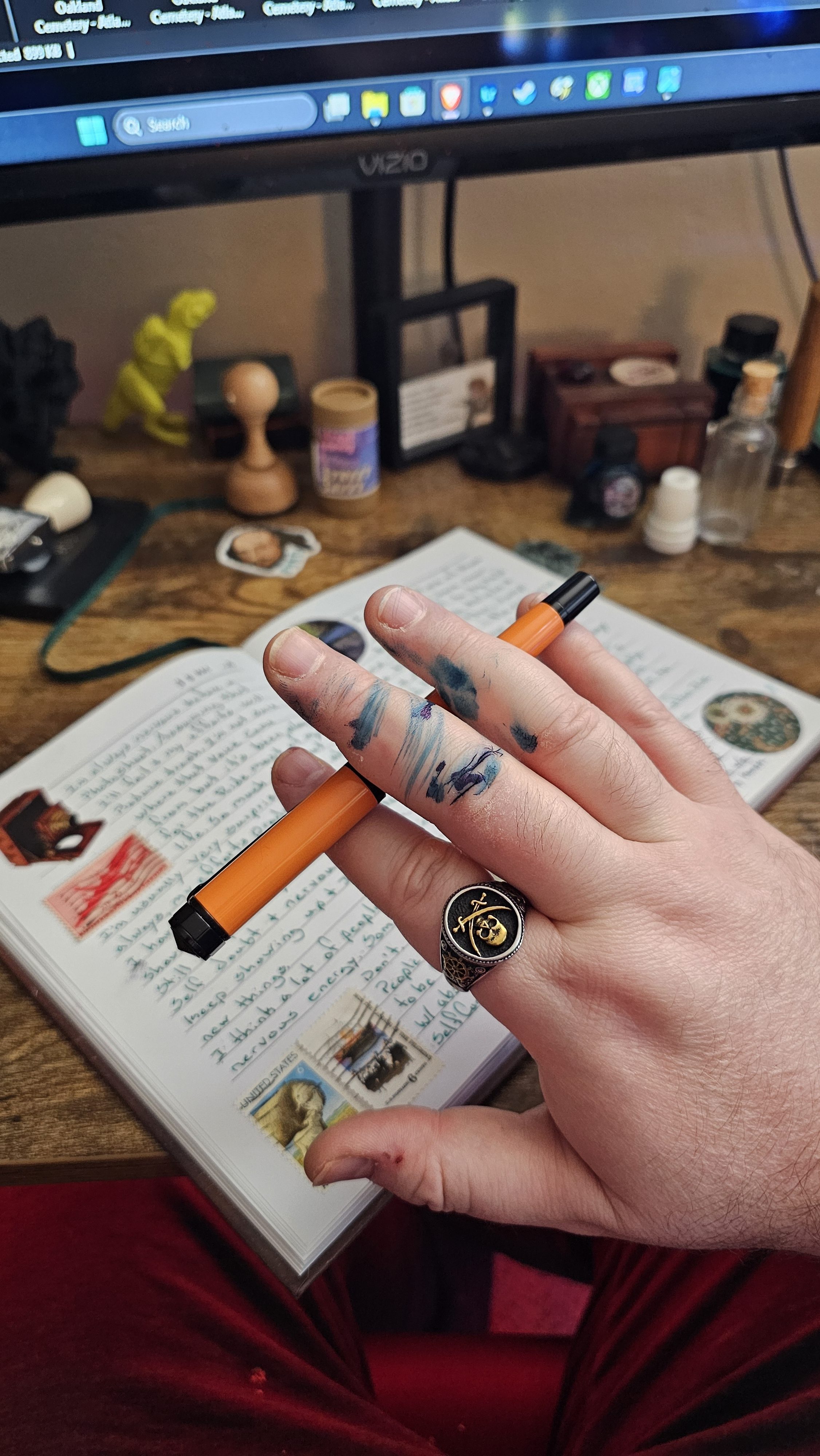
Not emails. Not texts. Not voice memos or DMs or any of the thousand frictionless ways we've invented to lob words at each other without actually touching anything. Letters. By hand. On paper. With a fountain pen, which is, and I say this with complete affection, an absolutely cool instrument to choose in the twenty-first century, a tool that requires patience, practice, and acceptance that sometimes the ink will do whatever it wants and you will simply live with that.
It started because my brother lost one of his children. There's no elegant way to write that sentence and I'm not going to try. Grief at that scale is a country with no roads in, you can't drive to it, you can't GPS your way through someone else's devastation. But I could write. So I did. Every week. A letter, sealed and stamped and dropped into the mail, because in all that unbearable silence I hoped, not knew, not guaranteed, just hoped, that something tangible arriving in a mailbox might carry a few grams of you are not alone with it.
I kept writing after that. I write friends and family every Sunday now, two or three letters. I joined a site called Postcrossing, which connects strangers across the planet for the express purpose of mailing each other postcards. I have sent postcards to people in Germany, Japan, Brazil, places I may never see, from a person they will never meet, carrying nothing but the small strange proof that someone in Atlanta sat down on a Sunday and thought I will send a piece of myself to a stranger and trust the postal service with it.
I have not received letters back. This is fine. This is not the point.
The point is the deliberateness of it. The point is that in a world engineered to move fast, to scroll, swipe, consume, refresh, repeat, there is something almost radical about sitting down and saying, I am going to spend the next hour entirely in service of another person's joy. No algorithm. No engagement metric. No reply button. Just ink and intention and the peculiar faith that the mail will figure out the rest.
And I have, I'll admit, gotten into it in the way a certain type of person gets into things, which is to say: completely, joyfully, with no obvious exit strategy.
I designed my own stationery. I print it on paper that has actual weight to it, paper that says I took this seriously. I write with fountain pens and inks in colors with names like Midnight Blue and Autumn Oak, which is either romantic or ridiculous and I have decided it is both simultaneously. I seal the letters with wax, real wax, melted with a little brass stamp, because if you're going to do something, do the thing. I have four wax seals in my collection. A fifth is incoming. I go to the post office and I ask for interesting stamps, the ones with birds or national parks or dead jazz musicians, because the envelope is part of the letter, the whole thing is the message from the moment it lands in someone's hands.
It is, as hobbies go, quiet. Deliberate. Stubbornly analog. I did it alone in my office every Sunday without ceremony, without announcement, the way I have always done the things that mattered most to me, quietly, in case someone noticed and decided it was weird.
And then my wife noticed.
She noticed, and she didn't say it was weird. She said she was thinking about starting her own letters. She said she'd been watching me disappear into my office on Sunday mornings with my pens and my wax and my careful rituals, and she thought, maybe she wanted that too. She was going to write to a friend in California. She might join me on Sundays.
I waited for the punchline. I am a man who spent a significant portion of his developmental years being set up for punchlines, and I know the shape of them, the little pause before the gotcha drops. I waited.
It didn't come.
She meant it. She genuinely, actually meant it.
Now listen. I have accumulated a small and fiercely loved circle of people who think I'm alright. My wife is at the center of that circle. She is, objectively, a person with excellent judgment. But forty-five years of bone-deep less than doesn't just dissolve because logic demands it, and so when the woman who knows me best, every chaotic, ink-stained, wax-dripping, stamp-obsessed corner of me, looks at something I do quietly, alone, without expectation, and says I want to do that too —
That lands somewhere different. That lands somewhere that's hard to name but easy to feel.
I'm not used to being cool. Probably never will be. But if someone has to look at me over a Sunday morning cup of coffee and think yeah, that guy's onto something — I'm glad, more than I know how to say, that it's her.
Self-Doubt and Creativity: He Wouldn't Believe It
Self-Doubt and Creativity: He Wouldn't Believe It
I've said it before. I'll probably say it again, the way you keep returning to a scar just to confirm it still belongs to you.
But God, I wish I could go back.
Not to fix anything. I want to materialize out of nowhere, slide into the booth across from my younger self, who is probably nursing chips and salsa in a Mexican restaurant scribbling in his journal, convinced the world had already decided its opinion of him — and just show him.
Not tell him. Telling never worked on me. Show him.
Spread it all out on the table. The photographs. The art. The projects that haven't even happened yet, built in collaboration with people he hasn't met, in rooms he hasn't stood in, for reasons he couldn't have invented on his best day. Let him turn it over in his hands. Let him squint at it under the lights.
He wouldn't believe it. That's the whole point. He'd look at me like I was running a con, because that's what his life had taught him to expect, the bait, then the switch. He'd be waiting for the catch.
There is no catch, kid. That's the most disorienting part.
The work is real. It's strange and it's real and it came from somewhere inside you that you keep trying to board up like a condemned building. Stop that. Quit apologizing for the weird corners. The weird corners are load-bearing.
Someday, someone's going to hand you a project and trust you to do something extraordinary with it, and you're going to be so alarmed by that trust that you almost fumble it... but you won't. You'll find the thing that lives underneath the obvious answer, the image that says what words keep failing to say, and you'll make it real.
Back then, I was sure that I was devoid of artistic talent. That creative projects were for other people, and that any effort I made at art would be pointless.
He wouldn't believe it. But I'd make him look anyway.

Life at 45: Scars, Stories, and Everything in Between
Life at 45: Scars, Stories, and Everything in Between
Yesterday, I turned 45.
Forty-five doesn’t sound like much when you say it out loud. It’s not one of those milestone numbers people make a big dramatic fuss about. But when I look back at what’s packed into those years, it feels less like a number and more like a well-traveled road with a few wrong turns, a couple of bar fights, and at least one questionable map.
In that time, I’ve been a lifeguard. A medic. I was a Mormon missionary once, and later an ex-Mormon, which is less of a clean break and more of a long conversation that never quite ends. I’ve worked in safety, trying to keep people from doing dumb things, and in sales, learning that people will absolutely do dumb things.
I’ve been married twice. Loved hard, learned a lot, picked myself up, and kept moving. Not always gracefully, but forward counts.
I’ve lived in nine states and moved 26 times. I know how to leave, and I know how to start over. Both come with their own kind of weight.
Somewhere along the way, I got dubbed a Knight by The Knightly Order of the Fiat Lux. Which still sounds like something out of a late-night campaign session, but I’ve got the title, so I guess that makes it real. Still waiting on the dragon, though.
I opened a gym, Geek and Gamer Fitness, because clearly I thought mixing barbells and nerd culture was a good idea. Honestly, it still is.
I’ve played hundreds of TTRPG sessions, built worlds, told stories, rolled dice that betrayed me at the worst possible moments. I’ve hit the shutter on my camera thousands of times, chasing those perfect little slices of time that don’t last nearly long enough.
I love conventions, DragonCon, ECCC, PAX, places where everyone shows up exactly as they are, turned up to eleven, and somehow that becomes normal.
I’m a son, a brother, an uncle, and a friend. Roles that don’t come with clear rules, just a lot of showing up and doing your best.
And yeah, there’s been anxiety. Depression. Some darker stretches where things got heavy and stayed that way longer than I would’ve liked. That’s part of the story too. Not the whole thing, but it’s in there.
My life hasn’t been smooth. It’s been chaotic, unpredictable, occasionally ridiculous, but never boring. I’ve lived a lot of different versions of life in these 45 years. Enough to know there isn’t just one way to do this.
It’s a little strange realizing there’s probably less road ahead than behind. Not scary, just… real. Makes you pay attention a bit more.
But however much time is left, one thing’s clear: I lived. I tried. I didn’t sit it out.
And honestly? That feels like something worth being grateful for.
From Survival to Stability: The Day I Bought a Photo Printer
From Survival to Stability: The Day I Bought a Photo Printer
I bought a dedicated photo printer this week.
Not the flimsy kind that sounds like it is fighting for its life every time you hit print. A real machine. An Epson SureColor P800 now sits in my office, quietly doing its thing, ready to turn pixels into something you can actually hold.
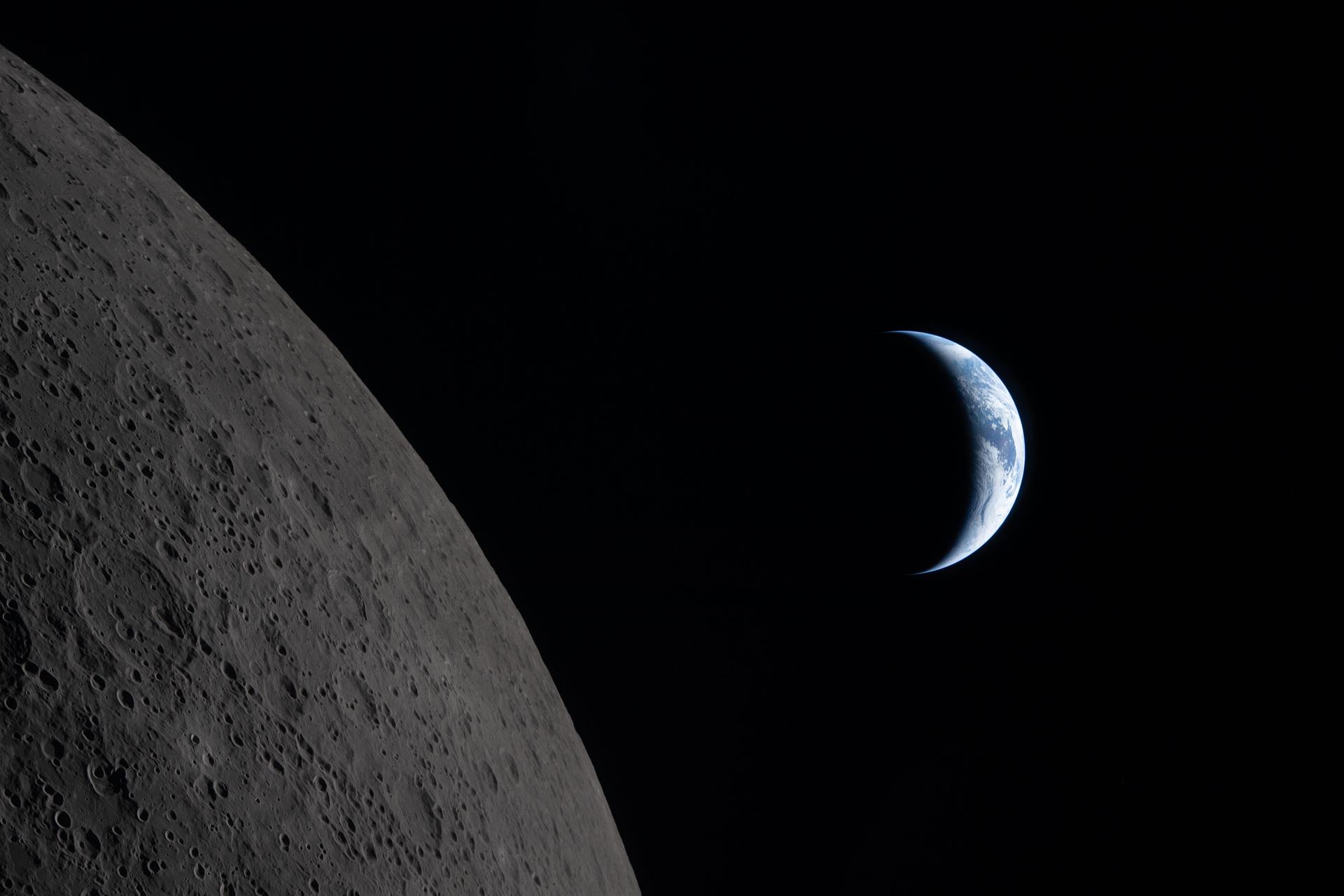
Of course, I had to break it in properly. So I printed a photo taken during Artemis II.
A photo taken in space. Printed in my office.
That still feels ridiculous in the best way.
But this is not really about the printer.
It is about where I used to be.
Not that long ago, I could not afford food. Not in the “cutting back” kind of way. I mean every dollar had a job, and none of those jobs included feeding me. Bills came first. Whatever was left went to my dog, Cordelia. She ate. I figured the rest out.
Sometimes figuring it out meant going without. Sometimes it meant stealing.
Usually hot pockets. Packs of four. Four meals if you stretch it. Grocery stores turned into quiet missions where the goal was simple and very clear. Get food. Do not get caught. Leave.
At the time, it did not feel dramatic. It was just part of the routine. Another thing on the list. Survive today. Worry about tomorrow later.
I remember being asked once how that made me feel. Having to steal food just to get by. And I did not have an answer. I had to actually stop and think about it, because I had spent so long just getting through things that I never stopped to process any of it.
When I finally did, it hit harder than I expected.
Now fast forward a few years, and I am standing in my office buying a printer that exists purely for my photography. Not because I need it. Not because it solves a problem. Just because I want it.
And my brain still does not quite believe that timeline.
How do you go from counting coins and skipping meals to investing in something like this
I have said a lot of harsh things about my past self over the years. Blamed him for mistakes. Second guessed decisions. All of that. And some of it is fair. He got things wrong. Sometimes really wrong.
But he also dealt with things that were not easy. Not even close.
He kept going anyway. He figured it out, piece by piece, even when it was messy and imperfect. He did the work to get out of that place, even if he did not always do it the right way.
And now I am here because of that.
Not in spite of him. Because of him.
So yeah, this printer matters.
Not because it makes beautiful prints.
But because it reminds me just how far things can actually change.