
Shooting DragonCon on 35mm Film
Shooting DragonCon on 35mm Film
This past weekend I was back at DragonCon in Atlanta, GA—my eighth time wandering through the whirlwind of costumes, creativity, and caffeine. Usually, I come armed with my Sony a7iii, photographing cosplay with the clarity and precision of digital perfection. But this year, I decided to do something different.
I left the pro camera at home.
Instead, I carried only my Olympus mju ii, a 35mm point-and-shoot that feels more like a time capsule than a tool.
Why? Because I wanted to see DragonCon differently.
Film doesn’t care about perfection. It doesn’t smooth over the cracks or polish the chaos. It gives you grain, blur, light leaks—accidents that somehow feel more alive than flawless digital files. Shooting DragonCon this way reminded me why I fell in love with photography in the first place.
It felt real. It felt raw.
And in a world overflowing with filters, AI-generated “art,” and endless fakery, that matters to me. I want to create work that can’t be faked—images that carry fingerprints, flaws, and honesty.
The experiment worked. These images? They aren’t just technically strong. They have soul.
So here’s to the imperfect, the unpolished, the beautifully real. Sometimes, leaving the fancy gear behind is the only way to remember why we pick up a camera at all.
[ngg src="galleries" ids="65" display="thumbnail"]

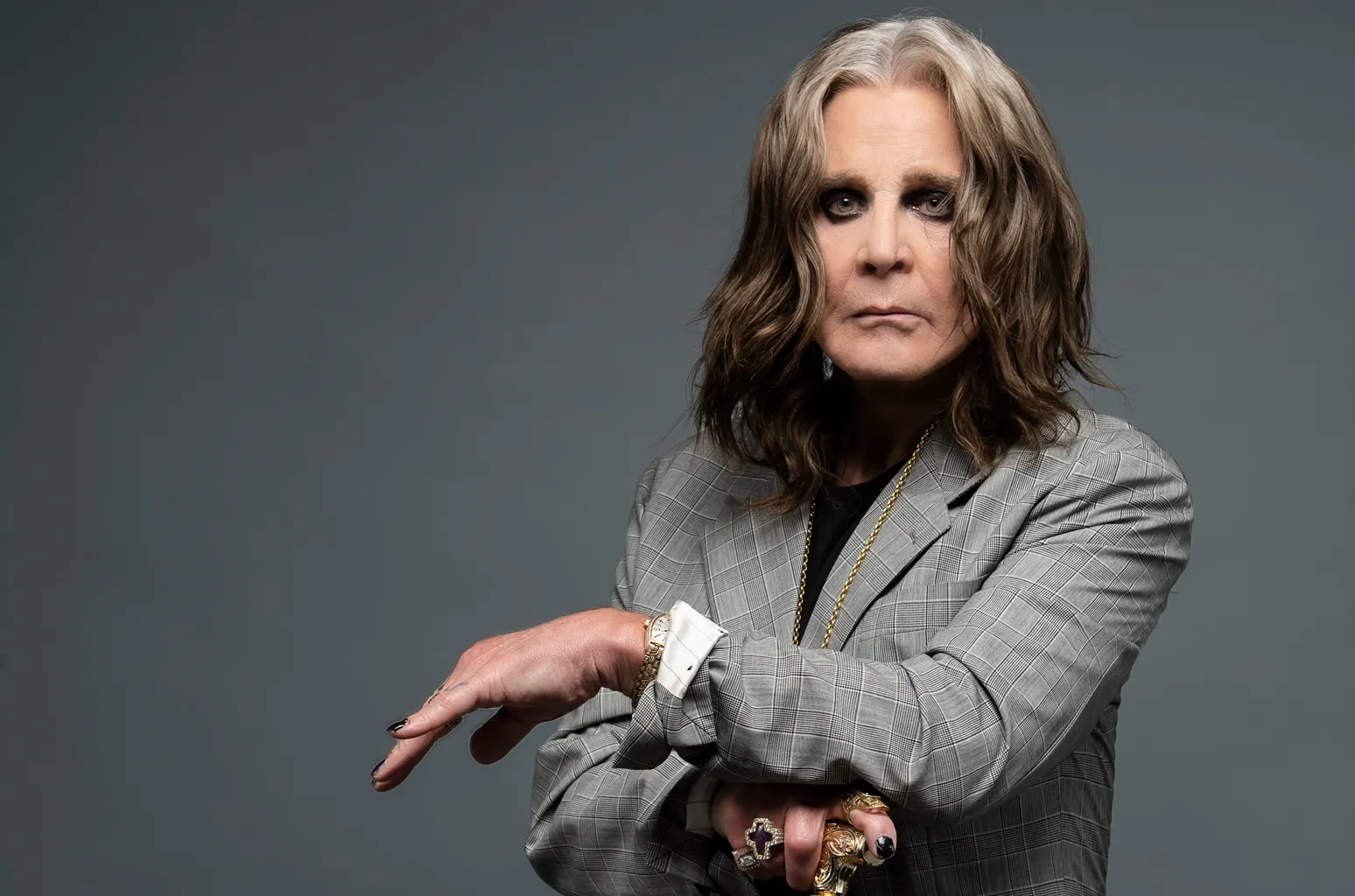
Goodbye Ozzy
Goodbye Ozzy Osbourne
Like a lot of folks around the world, I’ve had Ozzy Osbourne on repeat for days. His death caught me off guard—not in the "celebrity dies, cue the tribute posts" kind of way, but in the gut-punch, slow-burn grief kind of way. The kind that sneaks up on you and sits heavy. I didn’t expect to feel it this deep. But I do. And I want to try and explain why.
Anyone who knows me knows that 80s hair metal is my music. Poison. Guns & Roses. Alice Cooper. Foreigner. Motley Crüe. And yeah—Ozzy. What most people don’t know is how hard it was for me to even find that music, much less fall in love with it.
I grew up in a hyper-conservative, right-wing Mormon household. The kind where "Satanic Panic" wasn’t a warning label—it was taken as gospel truth. My mom would latch onto every half-baked urban legend about musicians and treat it like fact. She tried to ban D&D. Certain books. And of course, music. Especially the kind I ended up loving.
For the first 14 years of my life, my world was small. Church-approved, sanitized, and heavily filtered. But when I hit high school, everything cracked open.
Enter Donna and Markham—two of the best people I’ve ever met, then and now. The three of us stumbled headfirst into the world of 80s hair metal, and it felt like coming home. We listened constantly, we swapped albums, we got weird and loud and free. And we caught hell for it.
My CDs disappeared from my room more than once—thanks, Mom. My dad once hauled me into the bishop’s office, hoping the church could succeed where he’d failed. Meanwhile, he listened to classical music and Rush Limbaugh and couldn’t fathom what I saw in eyeliner and guitar solos.
But they couldn’t stop it. That music sank into me and stayed.
It shaped how I dressed, how I loved, how I rebelled.
It taught me how to scream back at the world without saying a word.
It gave me a place to belong.
And Ozzy was a huge part of that.
He was loud and flawed and real.
He didn’t hide his mistakes. He didn’t pretend to be better than he was.
He just was.
A father, a husband, a survivor, and yeah—a little batshit. But always honest.
He didn’t conform. He didn’t water himself down. And in doing that, he gave kids like me permission to be something other than what we were told to be.
His death feels like losing a weird, beloved uncle. One of the only adults who never expected you to behave. I’m sad he’s gone. Really, deeply sad. But more than anything, I’m grateful.
Grateful for the music.
For the rebellion.
For the reminder that sometimes, being “too much” is exactly what the world needs from you.
Goodbye, Ozzy.
And thank you.
For all of it.
You mattered. A lot.
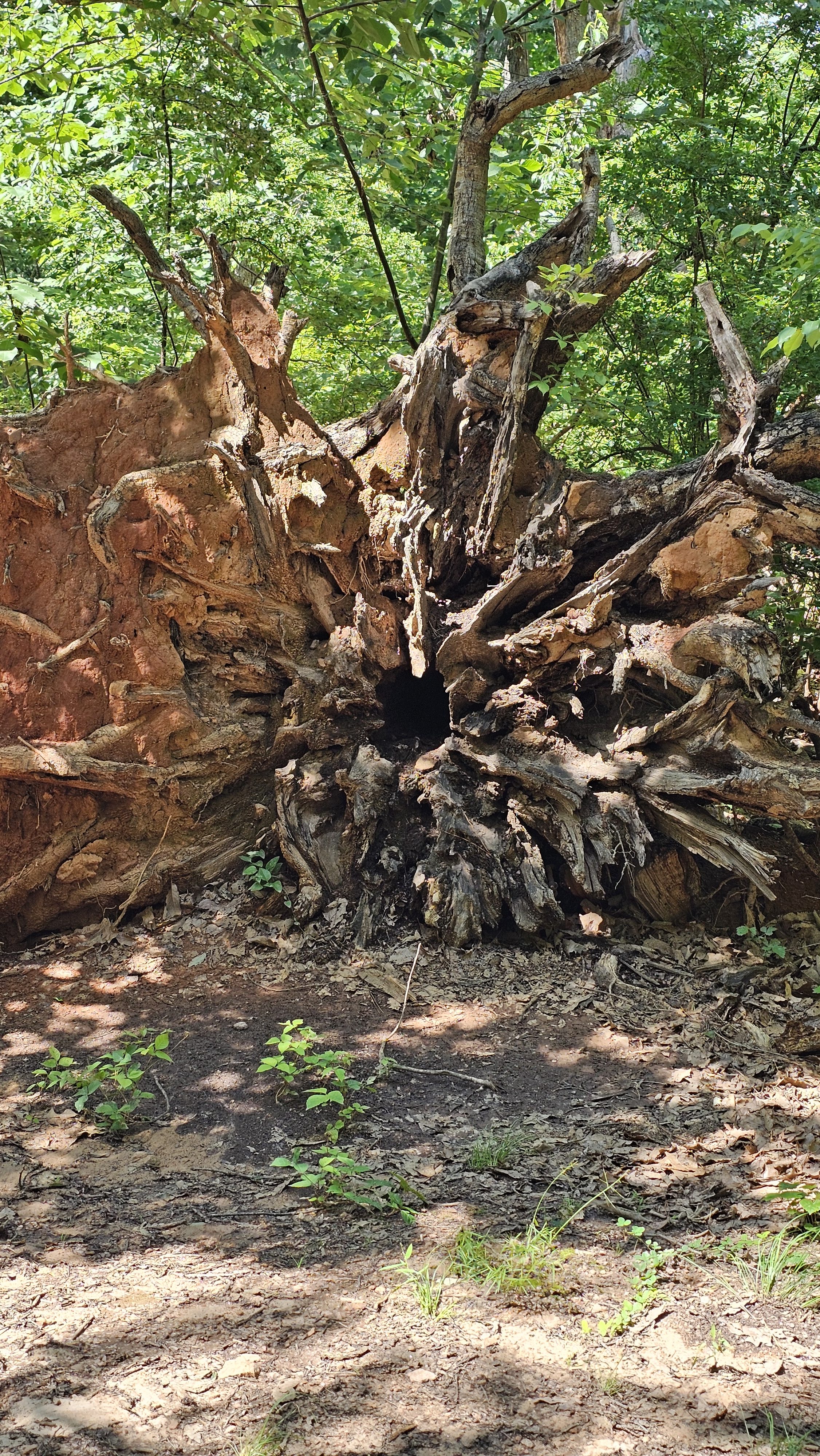
A Quiet Trail Away from History
Ethical Hiking in Georgia
Yesterday, my wife and I went for a hike here in Georgia—a last-minute decision sparked sometime around 1:30 in the afternoon, the kind of plan that comes together more on instinct than intention. But even spontaneity has its roadblocks. Most of the trails near our place wind through Kennesaw Mountain, a site heavy with Civil War history—Confederate cannons still poised as if waiting, statues carved in reverence, and museums that feel like they’re trying too hard to remember the wrong side of things.
Neither of us felt comfortable walking through that sort of curated nostalgia. So we kept searching, scrolling through park listings and trail maps until we found a quiet spot not too far away—no monuments, no ghosts, just trees and trail.
We threw on our boots and headed out. The hike was gorgeous—sunlight filtered through the canopy in ribbons, the air smelled like warm earth and green things. As usual, I brought my Sony a7iii, convincing myself I might use it. I didn’t. It hung off my shoulder like a very expensive mistake, while my Galaxy S23 did all the real work, snapping quick photos and short videos along the way. I really ought to stop bringing the Sony on these kinds of hikes—it’s just extra weight I carry out of habit.
Still, it was a good day. One of those slow, quiet adventures that sneaks up on you and stays a while.
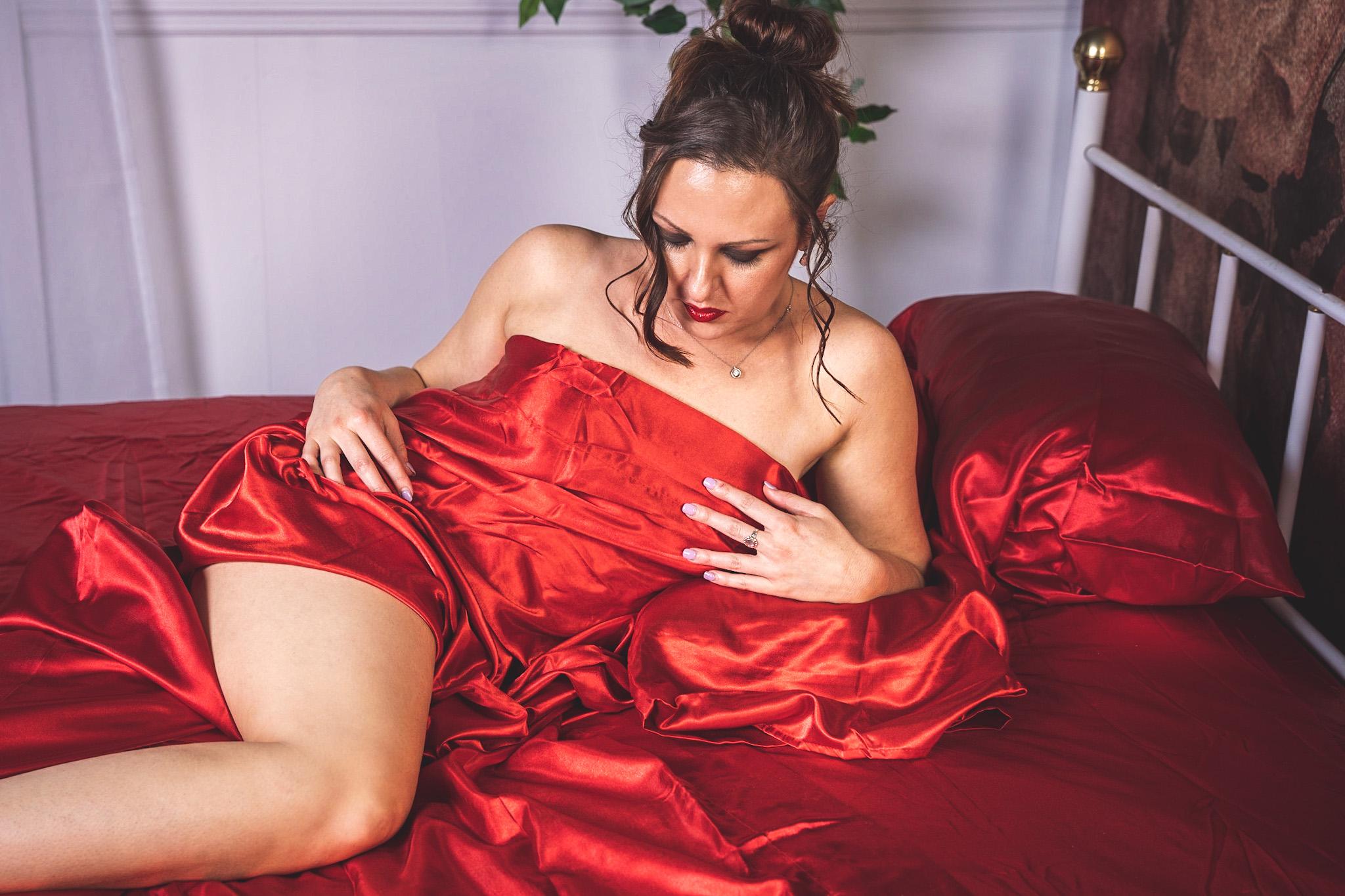
License to Shoot
License to Shoot: A Bond Girl Photoshoot
I’ve been under the spell of James Bond since childhood—specifically, since my father, in what I now recognize as a pivotal act of cultural initiation, sat me down to watch The Living Daylights. Timothy Dalton, sharp as a dagger and smoldering with restraint, was my first Bond—and you never quite forget your first. While the world collectively genuflects before Sean Connery, I remain part of the apostate sect who believe Dalton brought something darker, something truer to the literary Bond: a man caught between duty and self-destruction.
From there, I spiraled gloriously. I’ve seen every Bond film more times than I care to count (or admit), not just as a fan but as a student—examining lighting, color theory, composition, costume design. I studied them the way one might study ancient texts, or deconstruct a fever dream. The Bond universe became, for me, a mythos of aesthetics and archetypes—elegant violence in a tailored suit.
A few years ago, my longtime friend, model, and enduring muse Maeve approached me with a gleam in her eye and a question on her lips: “What if I played a Bond Girl?” Not just any Bond Girl—Xenia Onatopp, that high-camp avatar of lethal sensuality. Of course, I said yes before she’d finished the sentence. That shoot was a glorious collision of style and subtext: velvet shadows, wicked smiles, power and performance stitched into every frame. It awakened something in me—a hunger to do more with this theme, to build something larger out of the world I’d loved for so long.

Fast forward to the present. I decided it was time to return to the world of spies, stilettos, and shadows. I reached out to several new models—Heather, Mackensie, Morgan, and Hunter—all artists in their own right, each with their own edge, grace, and mystery. We met in downtown Atlanta, our city of glass and grit, and transformed it into a living soundstage. Rooftops became rendezvous points. Alleyways whispered secrets. Laughter echoed off brick and concrete as we channeled elegance and espionage beneath the Southern sun.
Every photograph was a collaboration, a dance of glances and lighting, attitude and atmosphere. While editing, I leaned into a film noir palette: deep blacks, sharp contrasts, the quiet menace of chiaroscuro. And for the first time in my career, I brought out my Canon AE-1 and loaded it with black and white film. There’s something sacred about shooting analog—it slows you down, makes you breathe, forces intention into every frame. It felt right. It felt Bond.
The results? Nothing short of electric. These weren’t just photos; they were stories mid-sentence—freeze-frames of intrigue, moments charged with glamour and danger. I looked through the final images and saw not just Bond Girls, but icons in their own right. Women who didn’t need rescuing. Women who were the storm.
I can’t wait to work with these remarkable models again. There’s more in this world to explore—more themes, more tension, more romance dressed in danger. And in the spirit of Bond himself, I’ll keep chasing the next beautiful shot, the next story told in shadow and silver.
After all, what is photography but espionage with light?
[ngg src="galleries" ids="57" display="tile"]

Artistic Integrity: Making Choices That Serve the Work
Artistic Integrity: Making Choices That Serve the Work
When I was in high school, I attended a local community play. I don’t remember much about the story, but I do remember two things:
1. The cast was made up entirely of underage high school students.
2. There was a scene where two female actors sat on a park bench, having a conversation while smoking stage cigarettes.
At the time, the choice to have them smoke felt strange—out of place. The actors were clearly inexperienced with smoking, and it added nothing to the dialogue or the overall performance. It wasn’t a pivotal moment in the story, nor did it serve any artistic purpose. So why include it? Why did the director make that choice?
Later, it came to light that the director had a disturbing attraction to underage girls and a fetish for women smoking. In hindsight, his choice made perfect, unsettling sense—it wasn’t about the art. It was about his own desires, disguised as a creative decision.
That experience has stayed with me. As a photographer and artist, I often reflect on that moment in the audience—the feeling that something was off, even before I understood why. It serves as a constant reminder to question my own creative choices. Am I making this decision because it enhances the art? Or is it serving something personal, something unrelated to the work itself? If I find that it's the latter, more often than not, I remove it—because I remember.
I sometimes see artwork on social media that makes me wonder about the motivations behind its creation. But to be clear, I don’t believe it’s inherently wrong for artists to make personal choices in their work. Art is often deeply personal. Some of the most profound pieces in history were born from an artist’s private emotions, desires, and experiences.
Art is also subjective—what speaks to one person may not resonate with another. But I do believe that as artists, we should always take a moment to examine our intentions. Are we making choices that truly serve the piece, or are they fulfilling something else? Learning to distinguish between personal impulses and artistic integrity is an ongoing process, but it’s one worth pursuing.
Because in the end, great art isn’t just about what we want to create—it’s about what we choose to share with the world

Firefly Valentine's Day Cards
Firefly Valentine's Day Cards
A few years back, while tumbling through the vast, uncharted regions of Tumblr, I stumbled across a set of Firefly-themed Valentine's Day cards. Now, being the self-respecting Browncoat that I am, I immediately downloaded them without hesitation. And, like a loyal smuggler running the same route year after year, I've used those cards every Valentine's Day since. Why? Because when you find gold in the 'verse, you don’t just leave it behind.
Firefly is one of those rare gems of television history: a brilliant, quirky, and endlessly quotable show that was canceled far too soon. Fourteen episodes (and one movie) were all we got of this space-western masterpiece. Fourteen episodes to fall in love with Captain Mal's stubborn heroics, Wash's dinosaur obsession, Zoe's unwavering badassery, Kaylee's sunshine-in-engine-grease personality, and Jayne's... well, Jayne's cunning hat. And yet, despite its tragically brief run, the show still resonates, as fresh and relevant today as when it first took to the skies.
Every year, without fail, I carve out a little time to rewatch the series and Serenity, the cinematic epilogue that tried to give us some closure. And every year, I find myself mourning the lost potential. What adventures might we have witnessed if the show had been given a fair chance? What other shenanigans could our favorite misfit crew have gotten themselves into? What new characters, planets, and philosophical musings might have joined the tapestry of the 'verse? We'll never know. And that, my friends, is the true heartbreak.
But if there really is a multiverse out there, as some quantum physicists (and every sci-fi fan) suspect, then somewhere, in some alternate reality, Firefly got its due. There are ten, maybe fifteen glorious seasons of Captain Tightpants and company navigating the black. Perhaps there's a spin-off or two. A crossover with Doctor Who. A Jayne Cobb workout tape. Somewhere, out there, people are still excitedly discussing new episodes of Firefly. And I can't help but envy those alternate-reality bastards.
In the meantime, here I sit, printing off the same Firefly Valentine's cards and handing them out with a nostalgic smile. Because even though the show is gone, it left behind a little piece of magic. Love keeps a ship flying, after all. And as long as we keep sharing, quoting, and rewatching, the Serenity will never truly be grounded.
Happy Valentine's Day, fellow Browncoats. Stay shiny. And remember: you can't stop the signal.
[ngg src="galleries" ids="50" display="tile"]
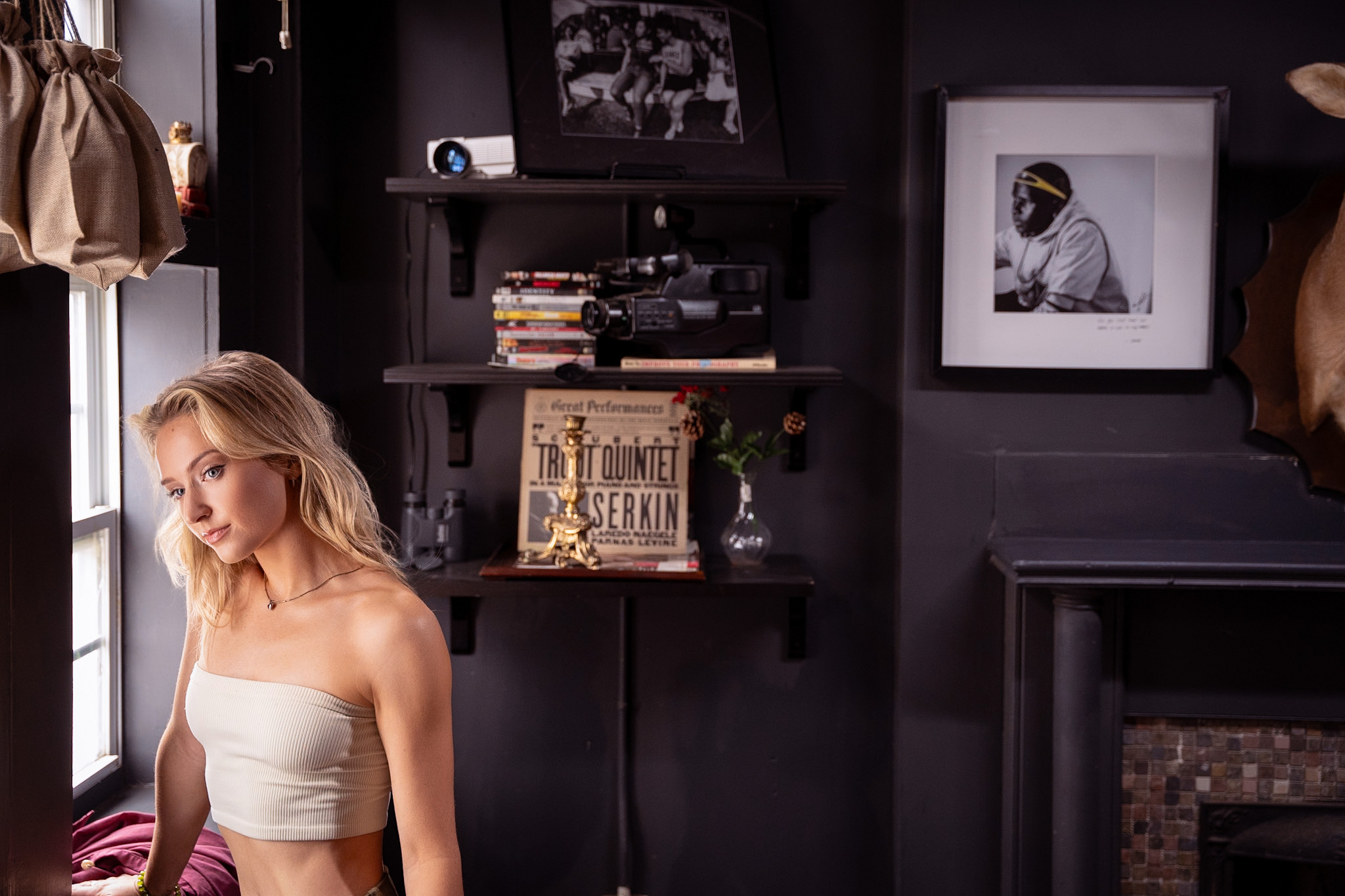
I Decided Not To Be A Hermit - Atlanta Shooters Event
I Decided Not To Be A Hermit - Atlanta Shooters Event
Since moving to Atlanta, I’ve been, well… a bit of a hermit. I’ve never been particularly great at making friends, and truth be told, I enjoy my solitude. There’s something deeply comforting about being at home, surrounded by my books, a fresh cup of coffee, and the warm, familiar presence of my pets. My most comfortable chairs are perfectly arranged in various corners of my house, each strategically placed for reading, thinking, or simply existing without the pressure of social interaction. And, most importantly, at home, I don’t have to wear pants—an underrated luxury.
But as nice as that sounds, there’s an undeniable downside to self-imposed isolation: loneliness. After spending the better part of a year holed up in my own little world, I had to admit that my social life was practically nonexistent. I wasn’t just lacking friends—I was actively avoiding situations where I could make them. And while I love my books, coffee, and pets, they aren’t exactly great at engaging in meaningful conversation.
So, when 2025 rolled around, I made a decision. This year, I would step outside my comfort zone and push myself to be more social. Specifically, I set a goal to attend at least twelve photography events—one per month. If nothing else, it would force me to interact with other people, and, with any luck, I might even make a friend or two along the way.
Fast forward to January 25th. I was mindlessly scrolling through Instagram, as one does, when I saw that Atlanta Shooters was hosting a model and photographer meetup in downtown Atlanta. The only problem? It was starting in less than an hour. Normally, this would be the perfect excuse to pass it up—I wasn’t mentally prepared, I hadn’t planned ahead, and I wasn’t even sure if I was in the mood for socializing. But something in me hesitated. Before I could talk myself out of it, I messaged Tony, the organizer, to see if there was still room for one more photographer. To my surprise, he responded almost immediately with a simple “Yeah, come on down!”
Now I had a new problem. Not only did I have to get dressed immediately—a challenge in itself—but I also had to gather all my camera gear, which was currently scattered in various states of disarray around my house. Batteries? Who knew if I had any charged. Lenses? Probably still in my backpack from my last shoot (whenever that was). Memory cards? Hopefully not still sitting in my laptop.
What followed was a frantic, last-minute scramble to throw everything into my camera bag, hoping I wasn’t forgetting something crucial. Miraculously, I managed to get my act together and rush out the door in time for the 30-minute drive into the city.
I arrived on time—something of a small miracle in itself—and found a solid turnout of both photographers and models. The energy was great. People were chatting, setting up shots, and exchanging ideas. After a brief moment of awkward hesitation (should I introduce myself first? Wait for someone to talk to me?), I took a deep breath and did what I came there to do—I started shooting.
What followed was an unexpectedly fantastic evening. I met some incredibly talented photographers, learned a few new tricks, and had the chance to work with some amazing models. More importantly, I actually enjoyed myself. It turns out that even someone as socially resistant as me can have a good time in the right setting.
And you know what? I’m glad I went. Because at the end of the day, as much as I love being a hermit, there’s something to be said for stepping outside, engaging with the world, and creating something new.
Oh, and the photos? Well, just take a look for yourself.
[ngg src="galleries" ids="48" display="tile"]

How To Survive The Next 4 Years
How To Survive The Next 4 Years
A lot of people, including myself, are wondering how to survive the next 4 years. The world feels a little heavy right now, doesn’t it? With all the news cycles buzzing and uncertainty in the air, it’s easy to feel overwhelmed—especially if you’re a creative, LGBTQ+, Trans, or someone who doesn’t quite fit into the narrow boxes that some would rather we all live in. But take a deep breath. You’re not alone, and you are stronger than any storm that rolls through.
Here’s a practical guide to surviving in the coming days. Think of it as your roadmap to keeping yourself intact while navigating dangerous terrain.
1. Stay Informed, Not Overwhelmed
Yes, it’s important to know what’s going on, but you don’t need to refresh social media every 15 minutes. Choose a couple of trusted, reliable news sources (think NPR, The Guardian, or your favorite independent journalists) and check in once or twice a day. Protect your mental health—it’s precious!
🛑 Pro Tip: If the news feels too much, follow some adorable animal accounts. A happy panda video never hurt anyone.
2. Build Your Community
There’s power in numbers! Whether you’re in a big city or a small town, find your people: artists, models, photographers, activists, or your favorite barista who makes the perfect chai latte. Your community can provide support, ideas, and a safe space to be yourself.
💡 Action Step: Host a potluck, attend a meetup, or join a meetup group for people in your niche. Creativity and solidarity grow stronger when shared.
3. Protect Your Privacy Like a Pro
We love a good selfie, but we also love staying safe. Be mindful of what you post online, especially about activism or other sensitive topics. Encrypt your messages, lock your devices, and maybe give that “Password123” password a glow-up.
🔒 Quick Fix: Try secure apps like Signal for private chats, install a VPN on ALL your devices, beware of apps that track activity like ALL META APPS, and set up two-factor authentication on your accounts.
4. Stock Up on Essentials
We’re not saying you need a bunker, but having a little stash of essentials never hurts. Think snacks, first aid kits, backup chargers, and a secret stash of your favorite chocolate.
🛒 Shopping List:
- Non-perishable food (and treats!)
- First aid basics
- A notebook and pen (for doodling or deep thoughts)
5. Keep Creating
Your art, your voice, your creativity—it matters now more than ever. Oppression thrives on silence, and your creations can be a form of resistance. Write that poem, paint that masterpiece, or snap that photo. Share it with the world or keep it close—your choice, your power.
🎨 Challenge: Dedicate 15 minutes a day to your craft. No pressure, just play.
6. Be Ready to Dash
Okay, this one’s serious—but stay prepared. Have a plan in case things get a little too real. Know your rights, your escape routes, and who to call for help.
🚪 Pro Tip: Keep important documents (like passports and IDs) in a safe, easy-to-grab spot. Maybe throw in a portable charger and some cash, too.
7. Take Care of Your Mind and Body
You can’t pour from an empty cup, so take time to rest, recharge, and stay strong. Yoga, journaling, a walk in the park, or rewatching your favorite comfort show (Schitt’s Creek, anyone?)—whatever keeps you grounded.
🧘 Idea: Try five minutes of deep breathing each day. Seriously, it works wonders.
8. Believe in Yourself (and the Future)
You are not powerless. History has shown us that even in the darkest times, love and creativity can light the way. The road ahead might be bumpy, but your journey is worth it. Stay fabulous, stay strong, and keep showing up.
💖 Remember: You are part of a long legacy of people who’ve made it through tough times. You’ve got this.
Together, We Shine
No matter what the future holds, you’re not in this alone. Your voice, your art, your very existence—these are acts of courage and beauty. Let’s stick together, lift each other up, and show the world just how unstoppable we are.

How I Got Started In Photography
How I Got Started In Photography
I often find myself reflecting on how I got started in photography and am struck by the sheer chaos of it all. Many photographers I know have these beautifully linear origin stories—passions kindled in childhood, steadily nurtured over the years. But my path has been anything but straightforward.
My earliest memories of photography date back to the 8th grade. My parents owned a Canon AE-1, and I would often "borrow" it, sneaking off with some film to document school field trips. To say my photos were unremarkable would be kind. Most were littered with specks of dust because I was oddly fascinated with taking the lenses on and off without realizing I was inviting debris into the camera each time. Despite my lack of skill, I enjoyed the process—the tactile satisfaction of loading film, the anticipation of developing photos. It became a casual hobby I pursued sporadically through high school. Then, somewhere along the way, I stopped. I can’t pinpoint why, but by the time I graduated, the camera was left behind, and for the next 14 years, so was photography.
It wasn’t until 2014 that I picked up a camera again. At the time, I was married to a wedding photographer, and our relationship was unraveling. In a desperate attempt to salvage it, I turned to photography, hoping to bridge the growing distance between us. It didn’t save my marriage, but it reignited something in me. The more I learned, the more I fell in love with capturing moments and crafting images. Initially, I wasn’t very skilled—most of my pictures were candid snapshots taken while wandering around Olympia, Washington. But even then, I was drawn to the idea of photographing people, of creating something meaningful and evocative.
During that period, I was heavily active on Tumblr, marveling at the stunning imagery that filled my feed. I aspired to create work that could stand among those pieces, but I had no idea where to begin. Finding models was intimidating, and my lack of technical knowledge left me feeling out of my depth.
Everything changed in January 2016, after I moved to Los Angeles. My friend and roommate, Sydney, graciously agreed to model for me. It was my first real photoshoot with a person as the central subject, and I was both excited and terrified. Armed with a Canon 70D and a basic set of umbrella lights, I fumbled through the session, improvising everything from lighting to poses. Despite my inexperience, a few of the images turned out surprisingly well, and I was thrilled.
That shoot was a turning point. I began to understand how critical trust and collaboration are in the dynamic between a photographer and their subject. Sydney’s patience and willingness to let me learn through trial and error taught me lessons I still carry with me today. Though we’ve since lost touch, I’m deeply grateful for her trust during that early stage of my journey. Wherever she is now, I hope she’s safe, happy, and thriving.
Photography has never been a linear journey for me—it’s been a series of stops, starts, and unexpected turns. But those moments of chaos and discovery have shaped me, and I wouldn’t trade them for anything.
[ngg src="galleries" ids="45" display="tile"]I wish these photos had survived in better quality, but alas I didn't save RAW files back then. I didn't even save photos back then; instead, I relied on Facebook to keep my photos. A mistake to be sure, as both these photos were compressed saved images from my no longer active Facebook page.

We Made It Through...
We made it through day one.
For anyone who’s followed me even briefly, it’s no secret that I am not a fan of Trump. His first term was a particularly challenging time for me. I struggled to understand how anyone could support him, especially those who identified as “Christian.” I couldn’t wrap my head around the excuses made for his actions or the unwavering loyalty of many, including most of my immediate family.
During those four years, I fell into an exhausting cycle. Every morning, I’d wake up and immediately check Twitter to see what unhinged thing he had said, done, or posted overnight. I tracked his every move, staying hyper-informed in an attempt to prepare for the worst.
This constant vigilance wasn’t new to me—it’s a habit rooted in my upbringing. Growing up in a volatile environment taught me to think 12 steps ahead, overanalyzing and preparing for worst-case scenarios as a way to protect myself. But Trump’s presidency exacerbated those tendencies, and it took a toll on me.
When he lost the election four years ago, I felt an immense sense of relief. Biden wasn’t my first choice, but his presidency offered something I desperately needed: a reprieve. For the first time in years, I could breathe, even if just a little.
But here we are again. Trump is back. And this time, he’s accompanied by Zuckerburg, Musk, and a broader wave of propaganda and harmful agendas. I’ve decided to approach the next four years differently for the sake of my peace.
One small change I’m making is removing all Meta products from my phone. While I’m keeping my accounts, I’ll only be accessing Facebook, Instagram, and Threads from my desktop. Meta no longer has permission to track me through my phone. Moving forward, most of my updates and content will be shared here on my website—a space I control, free from algorithms and corporate agendas.
Now, some might say, “Adam, what does this have to do with photography?” And they’d be right—it doesn’t. But photography is just one part of who I am. Like everyone, I have layers. I refuse to box myself into one topic or persona. My blog is my space to share whatever’s on my mind, no matter how chaotic. If writers like John Scalzi can build a platform by being their authentic selves, why can’t I?
So, here’s my commitment: I’m going to handle these next four years differently. Trump stole my peace once; I won’t let him do it again. I’ll protect my mental health, focus on what matters, and support my chosen family and friends along the way.
Stay vigilant. Look out for each other. Protect your peace.
Good luck to us all.
